The Evolution of BG29/21 Compliance
For decades, the industry relied on high-velocity flushing to clear debris from new installations. However, as modern systems have become more complex, with intricate terminal units and smaller bore pipework, the traditional 'flush to drain' methodology has become increasingly difficult to execute and environmentally hard to justify. BSRIA BG29/21 acknowledges these challenges by placing a heavier emphasis on the continuous removal of contaminants during the cleaning process and the early stages of operation.
The primary shift in the 2021 revision is the focus on 'cleaning by design'. This involves ensuring that the system is equipped to handle the inevitable ingress of construction debris—sand, swarf, and iron oxides—without relying solely on high-velocity water bypasses which often fail to shift denser particulates. Side stream filtration acts as the constant sentinel in this process, providing a mechanical means to strip out solids that chemical cleaners merely loosen.
Furthermore, BG29/21 highlights the importance of the period between the initial clean and the handover to the facilities management team. This 'grey period' is often where systems fail, as stagnant water and residual debris lead to rapid microbiological growth and under-deposit corrosion. Integrating a side stream filtration skid during this phase ensures that the water remains within the specified turbidity and iron limits required for a successful sign-off.
- Removal of suspended solids before they can settle.
- Protection of high-efficiency heat exchangers and control valves.
- Facilitation of successful chemical passivation.
- Reduction in the volume of water required for flushing.
Technical Requirements for Water Quality
BSRIA BG29/21 sets out stringent benchmarks for water clarity and chemical composition. The presence of suspended solids is quantified through turbidity and iron content measurements. High iron levels are a direct indicator of active corrosion or the presence of significant amounts of magnetite, which is highly abrasive to pump seals and can block the narrow channels of modern plate heat exchangers. By employing side stream filtration, engineers can consistently achieve iron levels well below the 5 mg/l threshold often demanded by modern plant manufacturers.
The standard specifically addresses the size of particulates that must be managed. While traditional Y-strainers are essential for protecting pumps from 'construction rubbish' (large stones, welding slag), they are ineffective against the microscopic iron oxides that form the bulk of system sludge. These particles are often in the 0.5 to 10-micron range. BG29/21 underscores that if these particles are allowed to settle, they create the perfect anaerobic environment for Sulphate Reducing Bacteria (SRB), leading to localised pitting.
Achieving these water quality targets isn't just about passing a laboratory test; it’s about system longevity. Suspended solids increase the fluid's viscosity slightly and significantly increase the wear on control valves and heat meters. In energy-conscious designs, even a 1mm layer of sediment on a heat exchange surface can reduce thermal efficiency by up to 10%. Continuous filtration ensures that these targets are met not just on the day of the test, but predictably throughout the commissioning phase.
- Maximum Turbidity: < 10 NTU (ideally < 5 NTU).
- Total Iron: < 15 mg/l (aiming for < 5 mg/l).
- Suspended Solids: < 30 mg/l.
- Settled Solids: Nil.
The Role of Side Stream Filtration Skids
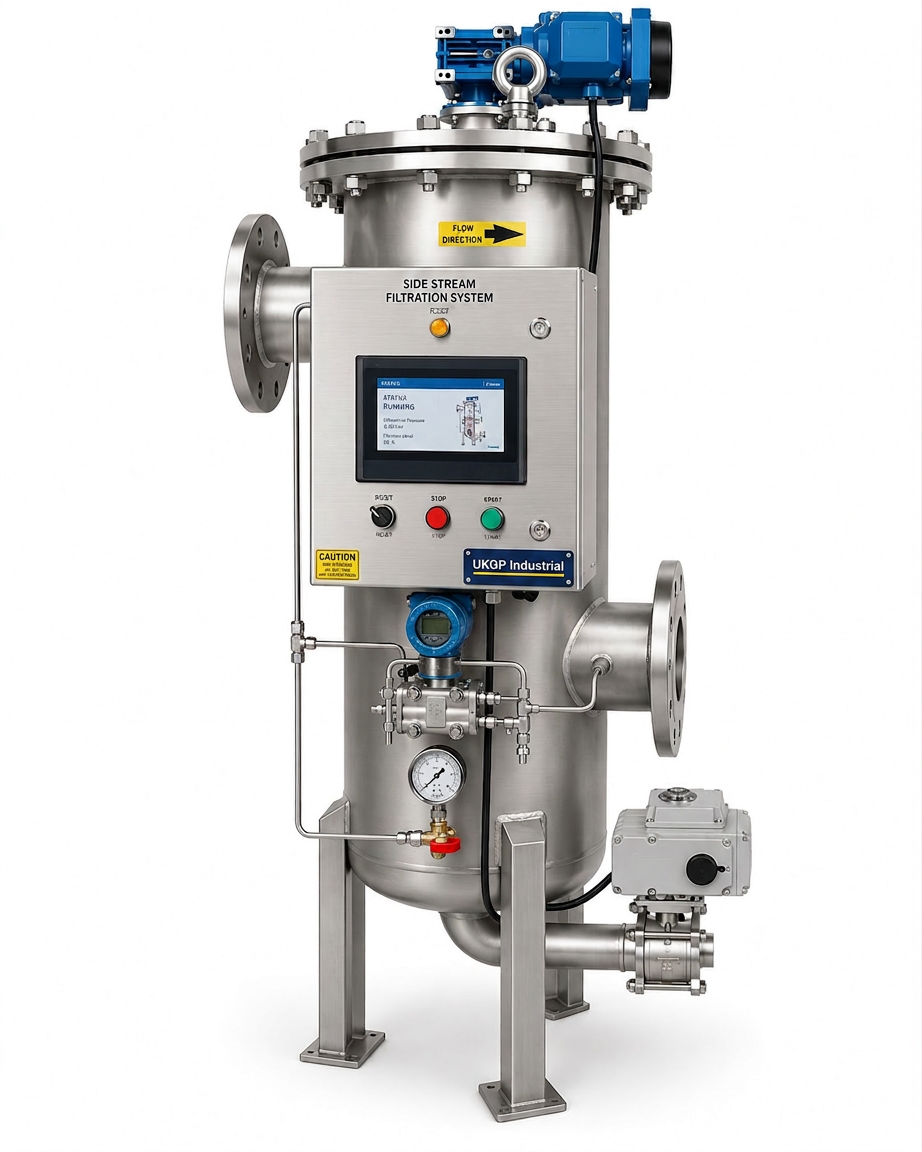
A side stream filtration skid is a self-contained unit that draws a portion of the system water, passes it through high-efficiency filter media, and returns it to the main loop. Unlike full-flow filters, which must be sized for the maximum system flow and can cause significant pressure drops, a side stream unit operates independently of the main building load. This allows for much finer filtration (down to sub-5 microns) without affecting the hydraulic balance of the primary circuit.
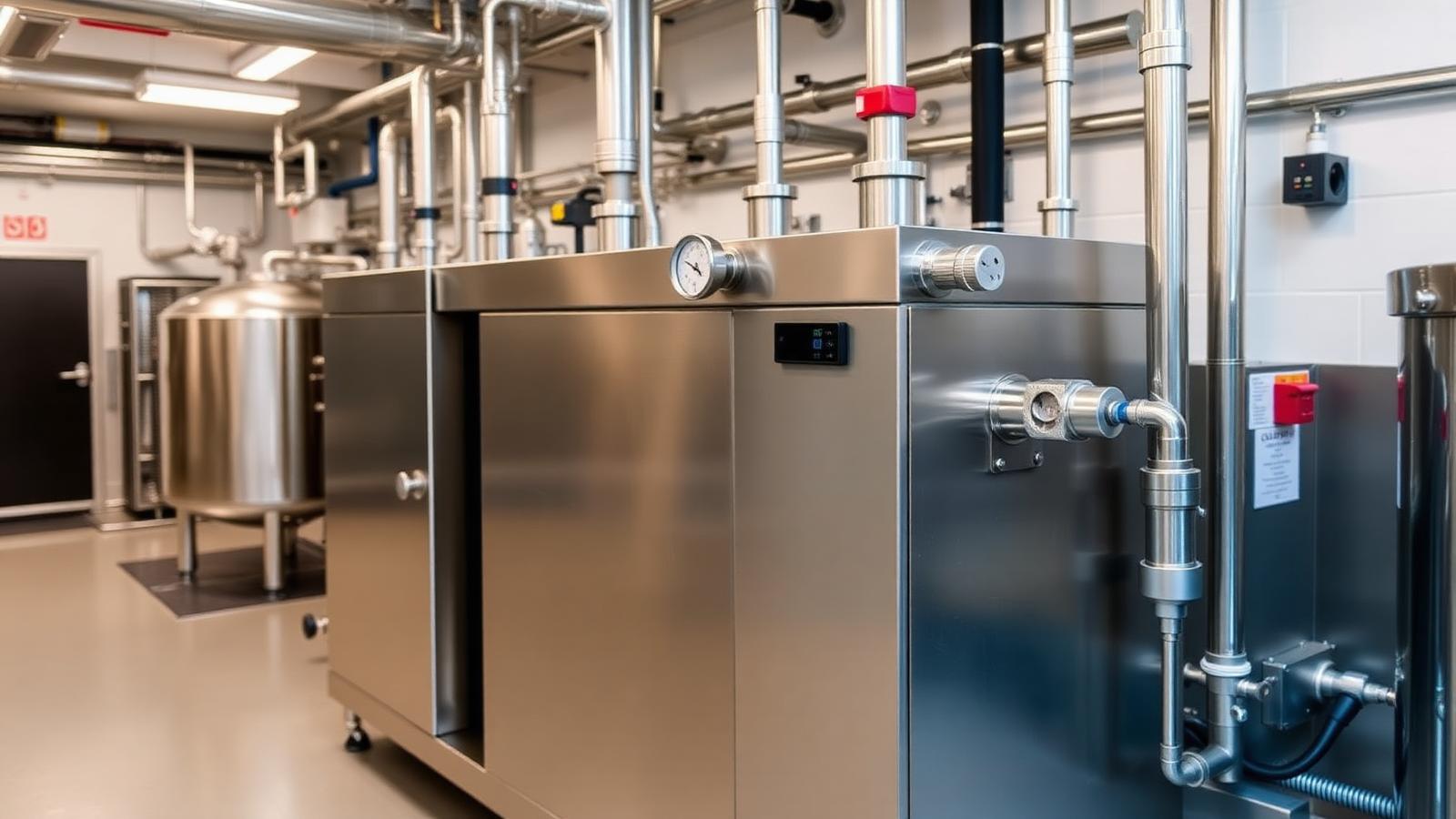
The UKGP side stream filtration skid is designed to meet the rigorous demands of BSRIA BG29/21. By treating a percentage of the water volume continuously, the unit ensures that the 'clout' of the water is constantly being reduced. This is particularly critical during the 'thin-film' passivation phase, where the addition of corrosion inhibitors can sometimes dislodge existing oxides. The skid captures these immediately, preventing them from being redistributed to the far reaches of the system.
In modern plant rooms, space is at a premium. Side stream units are often preferred because they require smaller pipework connections and offer a more compact footprint than large-scale separator vessels. However, their efficacy is dependent on the turnover rate. If the filtration rate is too low, the rate of particle generation through corrosion will exceed the rate of removal. Engineers must specify a turnover rate that accounts for both the total volume and the anticipated cleanliness of the installation.
- Flow rate: Typically 5-15% of the total system volume per hour.
- Media type: Glass media, sand, or high-efficiency bag/cartridge filters.
- Particle size: Capable of removing particles down to 5 microns or less.
- Automation: Automatic backwash or differential pressure alerts.
Integrating Air and Dirt Separators
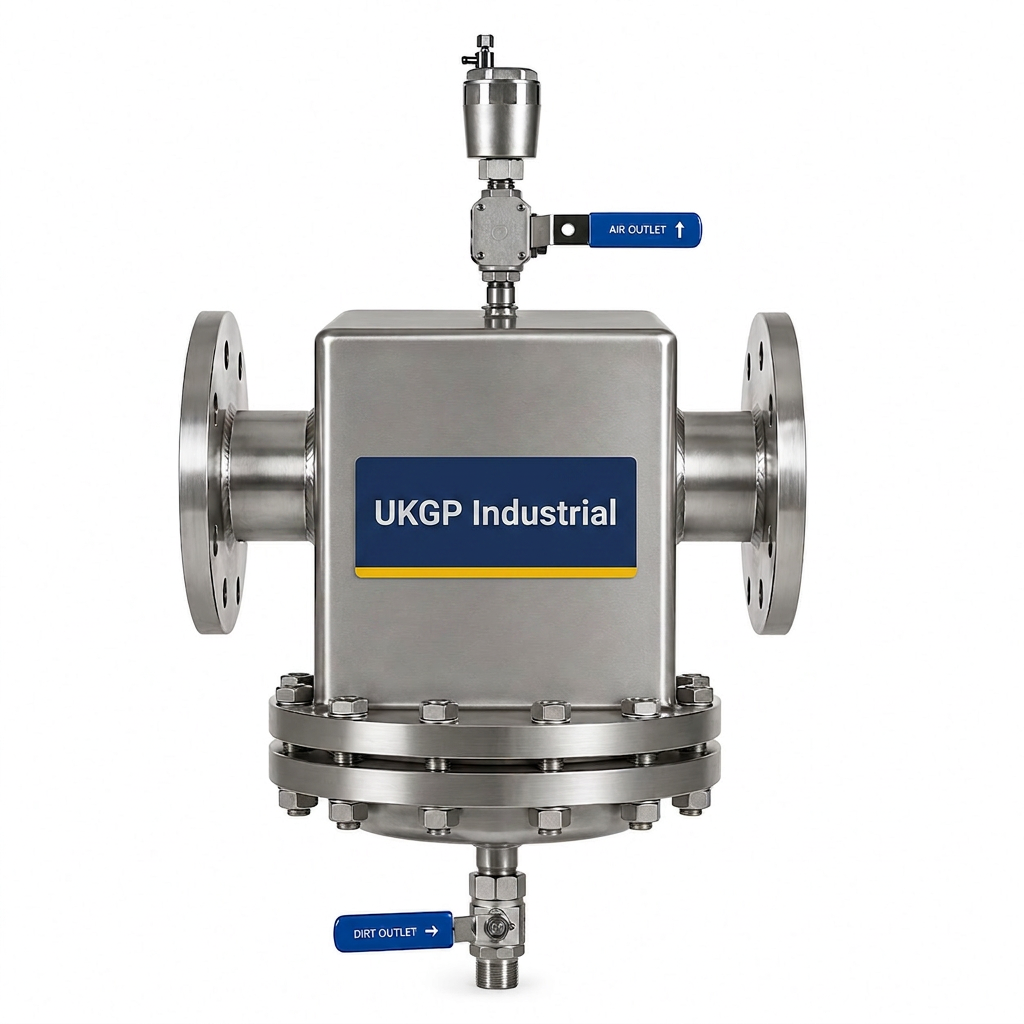
While side stream filtration handles the fine suspended solids, comprehensive system protection requires a multi-stage approach. UKGP air & dirt separators should be installed at the point of lowest solubility—typically the high-temperature side of a heating system or the return of a chilled system. These units use coalescence and centrifugal force to remove larger debris and, crucially, micro-bubbles of entrained air. Air is a primary driver of corrosion; without oxygen, the oxidation of iron into magnetite cannot occur.
BG29/21 highlights that the physical removal of air and dirt must happen in tandem. If air is left in the system, any filtration effort is a 'rear-guard action' against ongoing corrosion. By using an air & dirt separator to manage the bulk contaminants and the atmospheric gases, the side stream filter is free to focus on the fine-polishing of the water. This extends the life of the filter media and reduces the frequency of maintenance interventions.
Strategic placement of these components is vital. The separator acts as the first line of defence, protecting the boilers or chillers directly. The side stream filter then works across the broader system volume to refine the water quality. This dual-layered strategy ensures compliance with the spirit of BSRIA guidance by addressing both the cause (air) and the symptom (suspended solids) of water quality degradation.
- Inertia-based separation for larger debris.
- Magnetic interception for fine magnetite (black sludge).
- Vortex separation for air removal.
- Synergy between separators and side stream skids.
Design Considerations for Maintenance
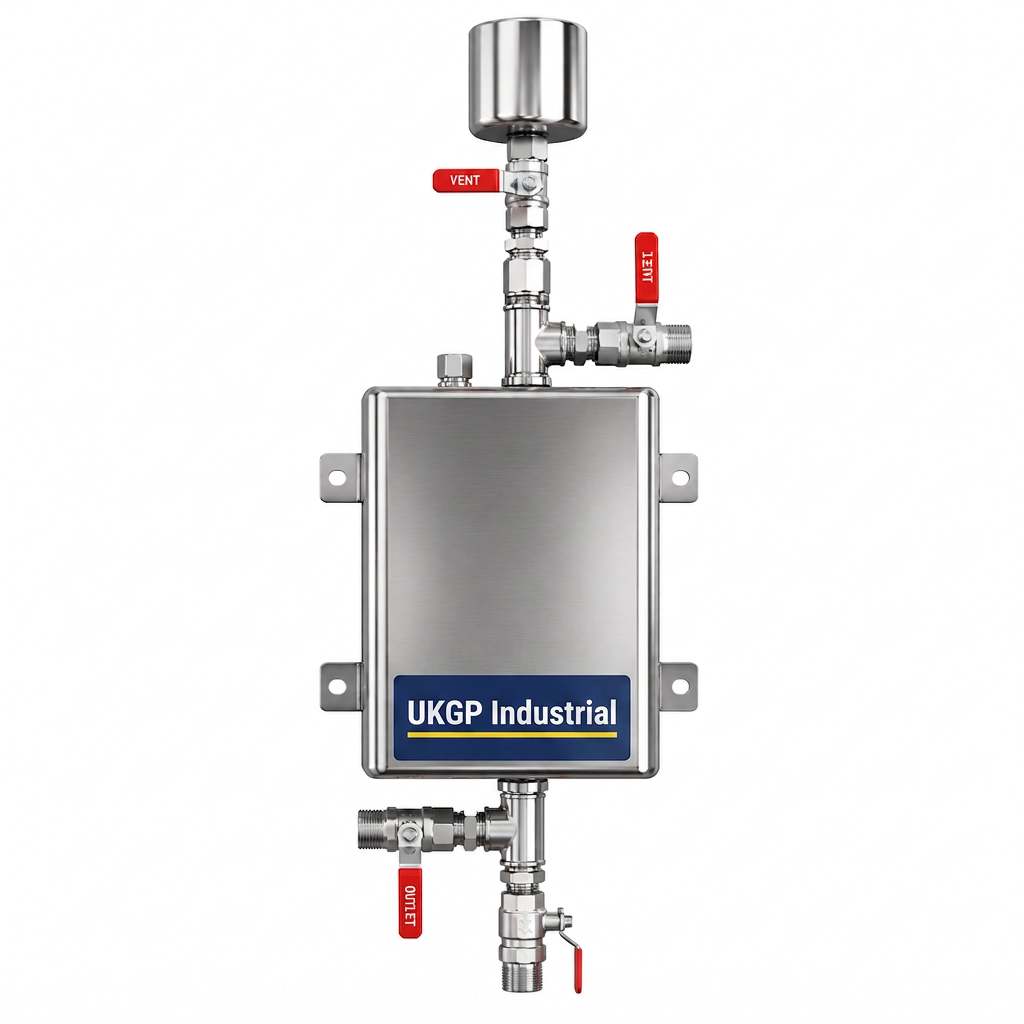
Compliance with BG29/21 begins at the CAD station, not the plant room. A system that is impossible to clean will never meet the required standards. Designers must ensure that side stream skids are located where they can be easily serviced, with internal lighting and sufficient clearance for media replacement. Furthermore, the selection of UKGP chemical dosing pots must be integrated into the design to allow for the controlled introduction of biocide and inhibitors.
Chemical dosing should not be a manual, haphazard process. When used in conjunction with side stream filtration, the chemicals ensure that any remaining metallic surfaces are passivated, while the filter removes any solids that the chemicals help to suspend. It is a common error to dose a 'dirty' system; the chemicals simply bind to the sludge, becoming inert and leaving the pipework unprotected. The filter must clean the water first to allow the chemicals to do their job.
Additionally, the design should facilitate easy water sampling. BG29/21 requires regular monitoring, and sampling points should be located both upstream and downstream of the filtration equipment. This allows the commissioning engineer to prove the efficacy of the skid and provides a clear audit trail for the client, demonstrating that the system water has been maintained within the specified parameters from day one.
- Eliminating dead zones where solids can settle.
- Ensuring adequate bypasses for flushing velocities.
- Locating dosing points for optimal chemical distribution.
- Selecting materials that resist corrosion from the outset.
The Impact of Filtration on Commissioning Timeframes
One of the most significant pressures on any M&E project is the handover schedule. Traditional flushing is a time-consuming, labour-intensive process that can take weeks for large-scale developments. Because side stream filtration can operate while other works are ongoing—even during the static pressure test phase—it significantly compresses the commissioning programme. It allows the system to reach the BSRIA 'clean' status while the controls are being wired or the insulation is being fitted.
By using automated side stream skids, the need for manual intervention is reduced. The system 'self-cleans' as it circulates. This is particularly advantageous in phased handovers, where sections of a building are brought online while others are still being piped. The filter prevents debris from the new construction zones from contaminating the already-commissioned areas. This 'zonal integrity' is nearly impossible to maintain through traditional flushing alone.
Furthermore, the reliability of the filtration process reduces the risk of failed water samples. A failed sample just days before handover can be catastrophic for a project's timeline and budget. Side stream filtration provides a predictable, measurable improvement in water quality that takes the guesswork out of the final analysis. It transforms water treatment from a 'dark art' into a verifiable engineering process.
- Lower turbidity: Reaching <5 NTU faster than flushing alone.
- Water conservation: Dramatic reduction in volume of water sent to sewer.
- Time efficiency: Continuous cleaning during other commissioning activities.
- Evidence-based handover: Datalogged filtration performance.
Protecting Secondary Heat Transfer Surfaces
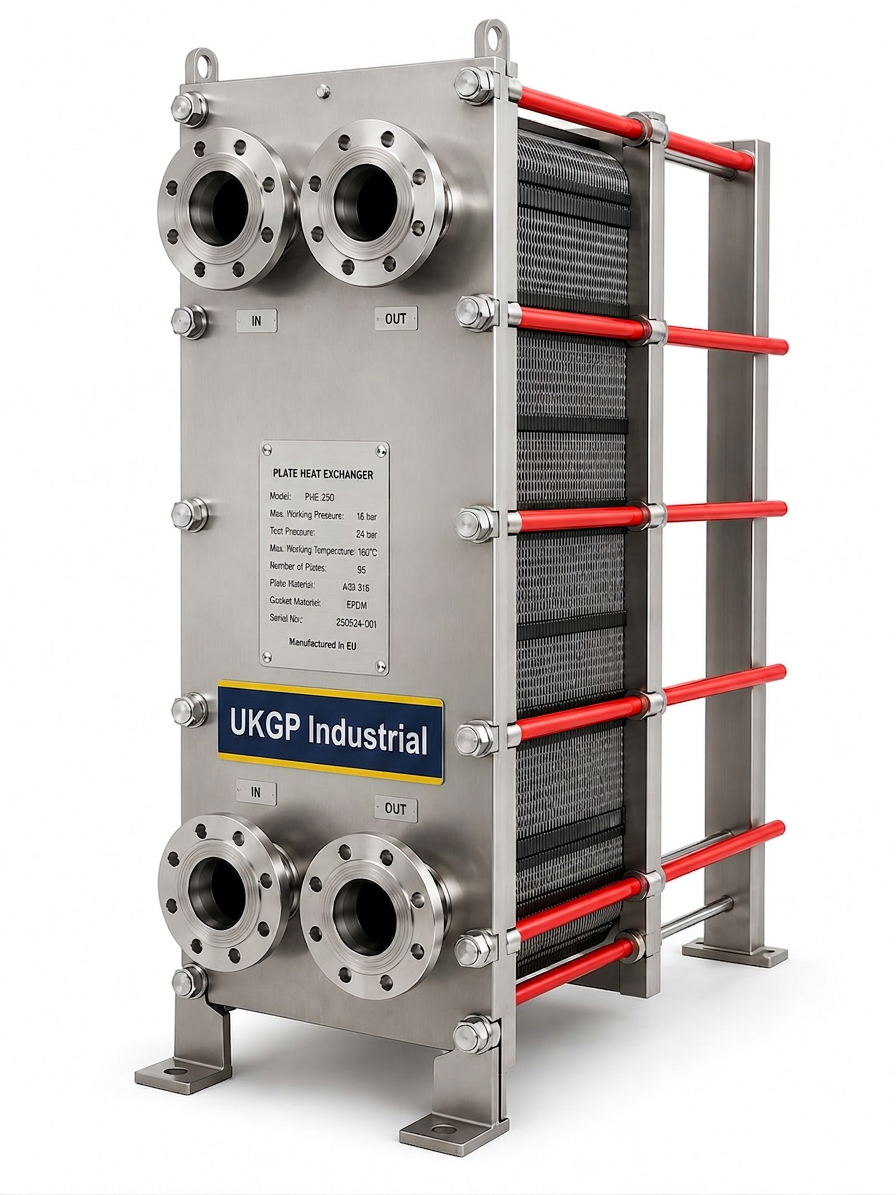
The proliferation of District Heating and HIU (Heat Interface Unit) networks has increased the reliance on UKGP plate heat exchangers. These components are highly efficient but have very narrow plate gaps, often less than 2mm. In a system without adequate side stream filtration, these gaps act as secondary filters, trapping magnetite and debris. This not only reduces the heat transfer coefficient but also increases the pressure drop across the exchanger, forcing pumps to work harder and increasing energy costs.
BG29/21 compliance is essential for the warranty protection of these exchangers. Most manufacturers will void warranties if the water quality does not meet the specified iron and turbidity levels. By ensuring the primary and secondary loops are both filtered, the risk of 'cross-contamination' is minimised. Even if the primary network is clean, a dirty secondary circuit can quickly foul the exchanger from the other side.
Maintaining the hygiene of these surfaces is a lifelong requirement, not just a commissioning one. While BG29/21 focuses on the initial 'clean', the transition to BG50 guidance for ongoing maintenance is seamless when side stream filtration is already in place. The same equipment used to achieve the initial clean serves as the permanent guard for the heat exchangers, ensuring they operate at their peak design efficiency for the duration of the building's lifecycle.
- High-performance heat transfer without the risk of blockage.
- Ease of chemical cleaning for the exchanger itself.
- Protection against thermal shock and pressure fluctuations.
- High-grade stainless steel construction for longevity.
Long-term Maintenance and BG50 Alignment
While BSRIA BG29/21 deals with the 'birth' of the system, BG50 ‘Water Treatment for Closed Heating and Cooling Systems’ covers its adult life. The integration of side stream filtration during the BG29 phase makes the transition to BG50 compliance much simpler. Facilities managers inherit a system that is already clean and equipped with the tools to stay that way. The filtration skid becomes a permanent part of the building's asset register, requiring only periodic inspection and media changes.
The cost of maintaining a side stream filter is negligible compared to the cost of a full system power-flush or the replacement of a seized 50kW pump. Routine maintenance typically involves checking the differential pressure gauges and ensuring the automatic backwash (if fitted) is functioning correctly. If the system is well-managed, the filter media may last for several years, only needing replacement if a major system modification introduces new contaminants.
In conclusion, BSRIA BG29/21 and side stream filtration are inseparable in the context of modern building services. The guidance provides the framework, and the filtration technology provides the means. For the consultant, it ensures the design intent is met; for the contractor, it ensures a smooth handover; and for the end-user, it ensures an efficient, reliable heating or cooling system. Adhering to these standards is no longer optional for high-performing buildings; it is the baseline for professional engineering practice.
- Regular monitoring: The key to long-term compliance.
- Replacing consumables: Bags, cartridges, or media.
- Data logging: Keeping a record of pressure drops and water tests.
- Staff training: Ensuring FM teams understand the equipment.
Frequently asked questions
What is the recommended flow rate for side stream filtration?
- Side stream filtration should typically circulate 5% to 15% of the total system volume per hour. BG29/21 focuses on the removal of suspended solids down to sub-5 micron levels to prevent settled deposits.
Can side stream filtration replace chemical dosing?
- No. Side stream filtration is a continuous physical process, whereas chemical dosing is a batch or proportional chemical process. Both must work in tandem; filtration removes the debris that would otherwise 'spend' the chemical inhibitors prematurely.
How do I monitor the effectiveness of a side stream filter?
- BSRIA BG29/21 recommends monitoring pressure differential across the filter media and conducting regular water analysis (TVC, iron levels, turbidity). A significant increase in pressure drop indicates the filter has successfully captured suspended solids and requires a backwash or media change.
Is BG29/21 applicable to older, existing systems?
- While BG29/21 is primarily for new builds, the principles are often applied to existing systems under BG50 guidance. For older systems, side stream filtration is even more critical to handle the higher baseline levels of corrosion products.