The Fundamentals of Combined Separation
A combined air and dirt separator serves two critical functions within a single vessel: the elimination of microbubbles through deaeration and the removal of suspended solids (dirt). These units typically utilize internal coalescing media—often PALL rings or structured stainless steel mesh—to create a zone of low-velocity flow. This allows microbubbles to rise to the automatic air vent while solid particles, which are denser than the fluid, settle into the collection chamber at the base of the unit.
From a building services perspective, the objective is to maintain a 'dead zone' where the flow velocity is significantly reduced (usually below 0.5 m/s internally). This ensures that gravity and buoyancy can overcome the kinetic energy of the fluid. Whether the unit is vertical or horizontal, the internal physics remain constant, but the impact on system hydraulics and maintenance access varies between the two designs.
- Effective removal of microbubbles through coalescing media.
- Efficient capture of non-magnetic and magnetic debris (when fitted with a magnet).
- Reduced system downtime by preventing air locks and component erosion.
- Compliance with BSRIA BG50 and BG29/21 water quality standards.
Horizontal Separators: The Standard for Plant Room Headers
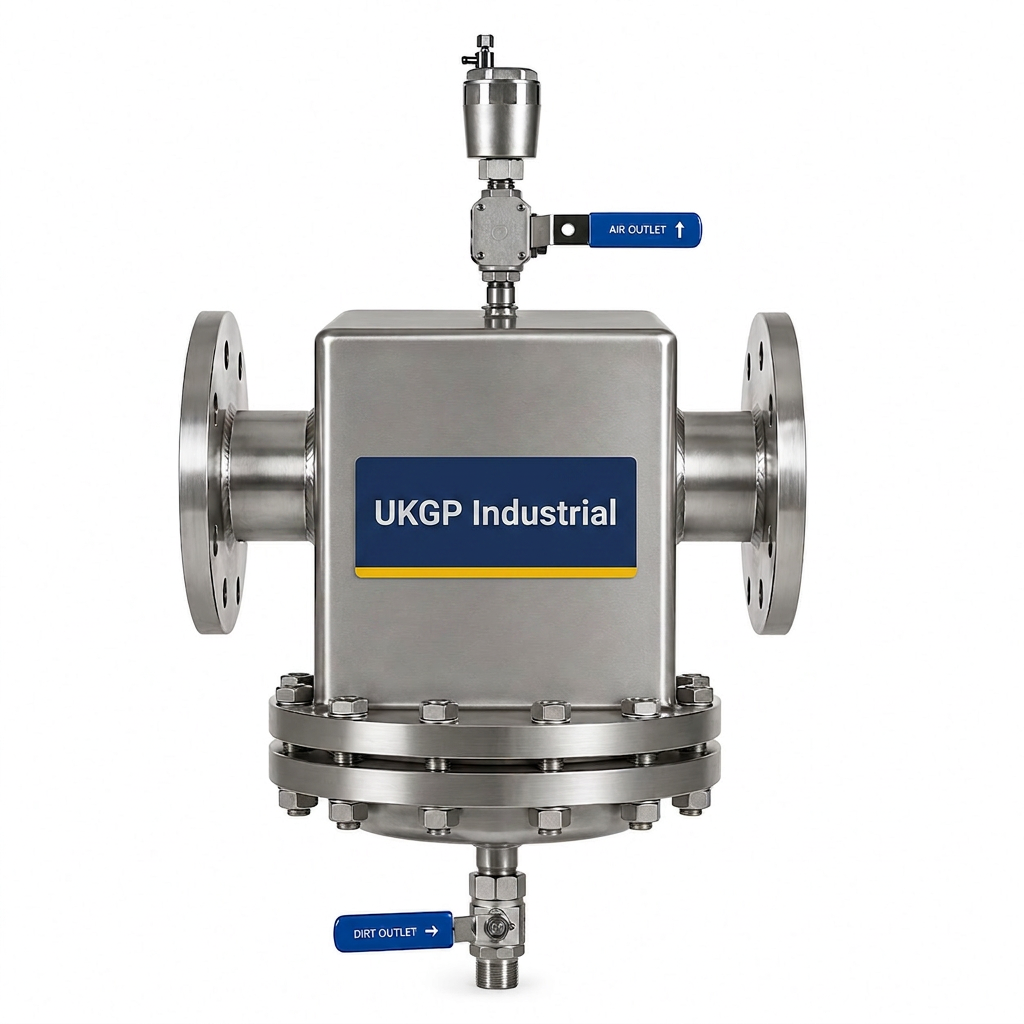
Horizontal air and dirt separators are the industry standard for most commercial boiler houses and chiller plants. They are designed for installation in horizontal pipe runs, typically on the flow side of LTHW systems where temperatures are highest and air solubility is lowest. In chilled water systems, they are ideally placed on the return header before the chiller, where temperatures are at their highest.
The primary advantage of the horizontal configuration is the larger footprint available for the collection chamber. In larger DN sizes (DN150 to DN600), horizontal units offer structural stability and ease of support via integrated feet or cradles. Because these units are often installed at high levels or within main distribution headers, the downward-facing blow-down valve is easily accessible for routine flushing of sludge and magnetite.
Vertical Separators: Solving Spatial Constraints and Riser Issues
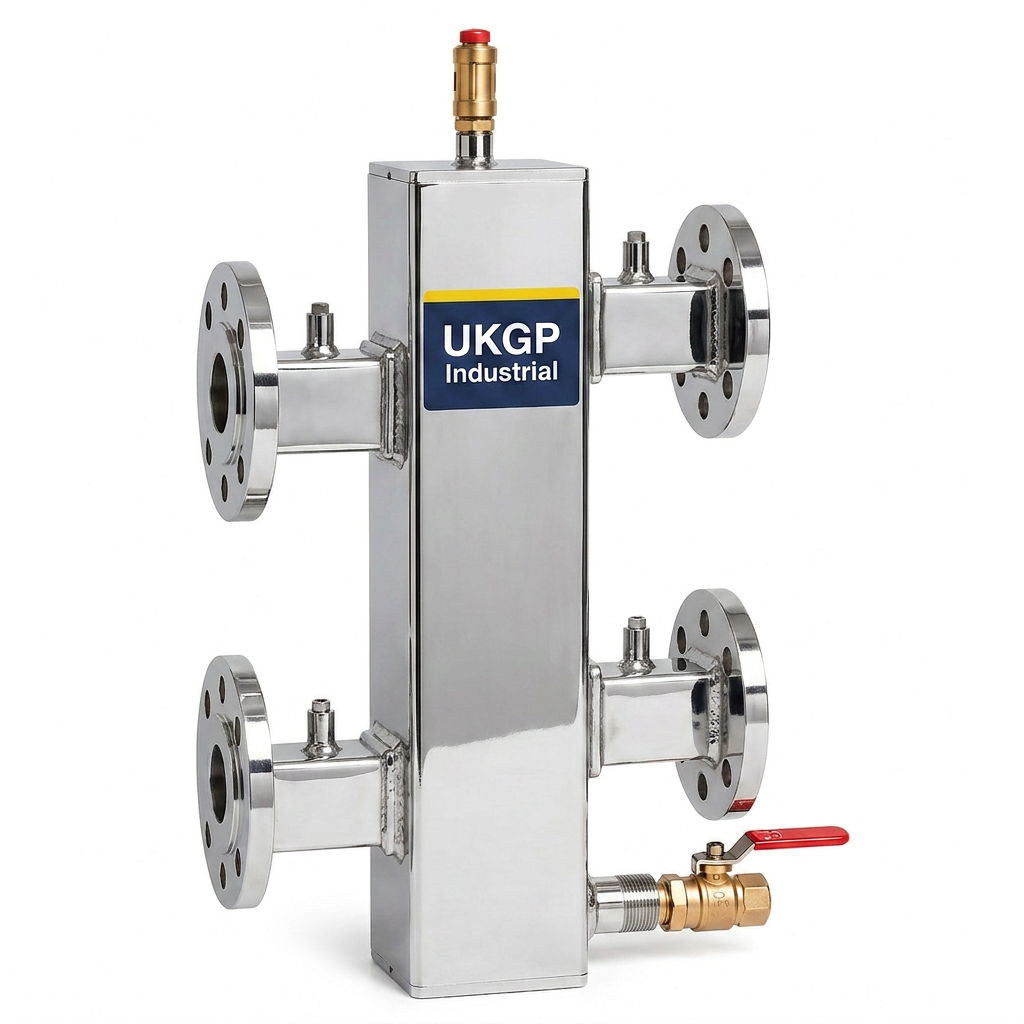
Vertical air and dirt separators are specifically engineered for installation in vertical pipework, such as main risers in multi-storey commercial buildings or compact plant rooms where horizontal runs are limited. Unlike standard units, the inlet and outlet ports are positioned on the sides of the vessel, allowing the main flow to pass horizontally through the unit while maintaining a vertical orientation for the deaeration and dirt collection chambers.
Engineers often specify vertical units when the plant room layout prevents a long horizontal run before a pump set or heat exchanger. While the internal cross-sectional area for velocity reduction is sometimes smaller than their horizontal counterparts, high-quality vertical separators (such as those in the UKGP Industrial range) utilize advanced internal baffles to ensure the same level of separation efficiency. They are particularly effective in refurbishment projects where existing pipework configurations cannot be easily modified.
Hydraulic Performance and Pressure Drop
A common misconception is that vertical separators incur a higher pressure drop (ΔP) than horizontal units. In reality, the ΔP is a function of the internal diameter and the resistance of the coalescing media, rather than the orientation of the ports. For most UK building services applications, a well-sized separator—whether vertical or horizontal—should have a pressure drop of less than 10-15 kPa at design flow rates.
However, it is vital to adhere to BSRIA BG29/21 and BG50 guidance regarding flow velocities. If a separator is undersized for the pipework capacity, the internal velocity will remain too high for effective deaeration and dirt settling. When selecting between vertical and horizontal units, designers must check the Kv value of the specific model to ensure it meets the system's hydraulic requirements without forcing the pumps to work harder.
Magnetic Separation and BSRIA BG29/21 Compliance
With the transition to high-efficiency ECM pumps and compact plate heat exchangers, the removal of magnetite has become mandatory. Modern air and dirt separators, regardless of orientation, should be specified with a magnetic insert. These rare-earth magnets attract fine black iron oxide particles that are too small to be caught by gravity alone.
BSRIA BG29/21 focuses on the cleanliness of systems during the pre-commissioning stage. Use of a combined separator during the initial flushing and bypass period can significantly reduce the time required to reach the target TSS levels. In vertical installations, ensuring the magnet is removable for cleaning is critical; some designs allow for the magnet to be withdrawn externally, facilitating a 'clean' blow-down without isolating the entire unit.
Installation and Maintenance Considerations
The choice between vertical and horizontal often comes down to the 'maintainable zone.' A horizontal separator reflects the natural flow of most basement plant rooms, but if the unit is installed too high, the blow-down valve may be difficult to reach, leading to a build-up of sludge that can eventually bypass back into the system. Vertical units in risers must be located where they can be bled safely and where a drainage point is nearby.
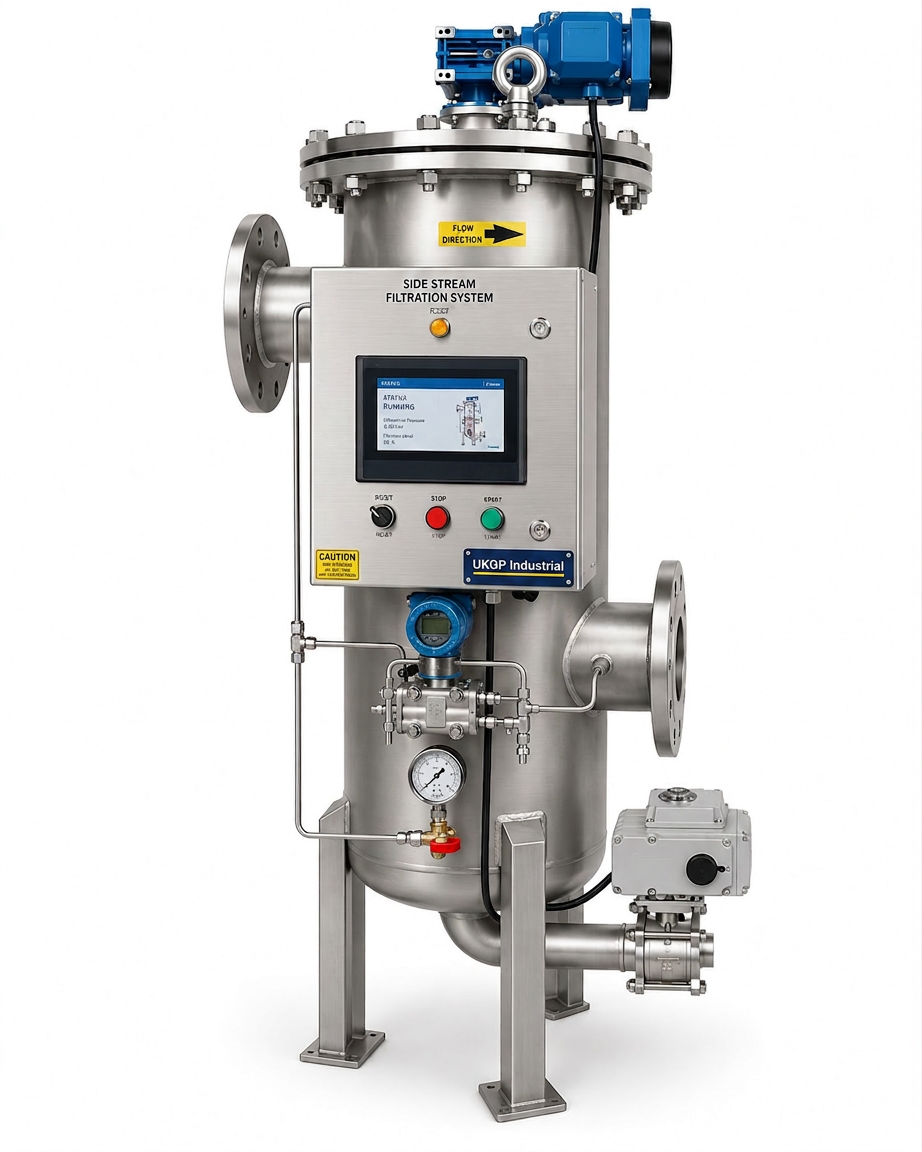
While air and dirt separators handle the bulk of suspended solids, engineers should consider complementing them with side-stream filtration for higher-specification projects. This ensures that even as the air and dirt separator manages the main flow, a dedicated filtration loop further polishes the water to meet the stringent requirements of contemporary commercial HVAC systems. Conventional maintenance schedules should include weekly blow-downs of the separator during the first month of operation, followed by monthly inspections.
Frequently asked questions
What is the best location for a combined air and dirt separator?
- For optimum microbubble removal, they must be installed on the flow side (hottest point) of LTHW systems or the return side (warmest point) of CHW systems. Locating them on the suction side of the pump also aids air release due to lower pressure.
Is a vertical separator less efficient than a horizontal one?
- A vertical separator uses the same internal coalescing media (such as PALL rings or stainless steel mesh) as horizontal units. The primary difference is the orientation of the inlet/outlet ports. While horizontally mounted units are more common in large plant rooms, vertical units are ideal for riser installations or tight plant headers.
How do these units relate to BSRIA BG29/21?
- BSRIA BG29/21 focuses on pre-commission cleaning, while BG50 covers ongoing water quality. Both emphasize the removal of suspended solids. Air and dirt separators are critical for meeting the 'low TSS' (Total Suspended Solids) requirements specified in these guides.
Can I install a separator with a smaller diameter than my main pipework?
- It is generally recommended to use a unit sized for the pipe diameter, provided the flow velocity does not exceed 3m/s. For high-velocity systems, a larger body size may be required to ensure the dwell time is sufficient for air and dirt separation.