The Role of Non-Magnetic Dirt Separators
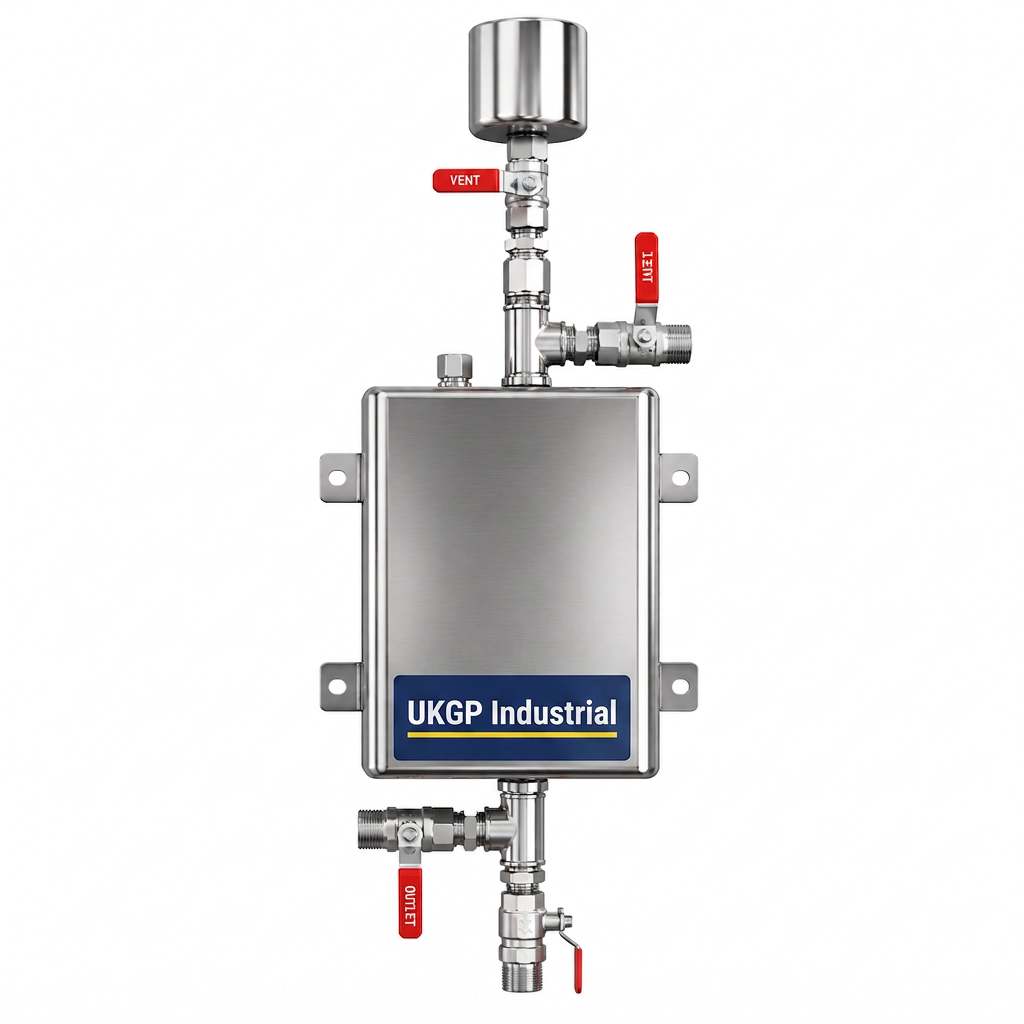
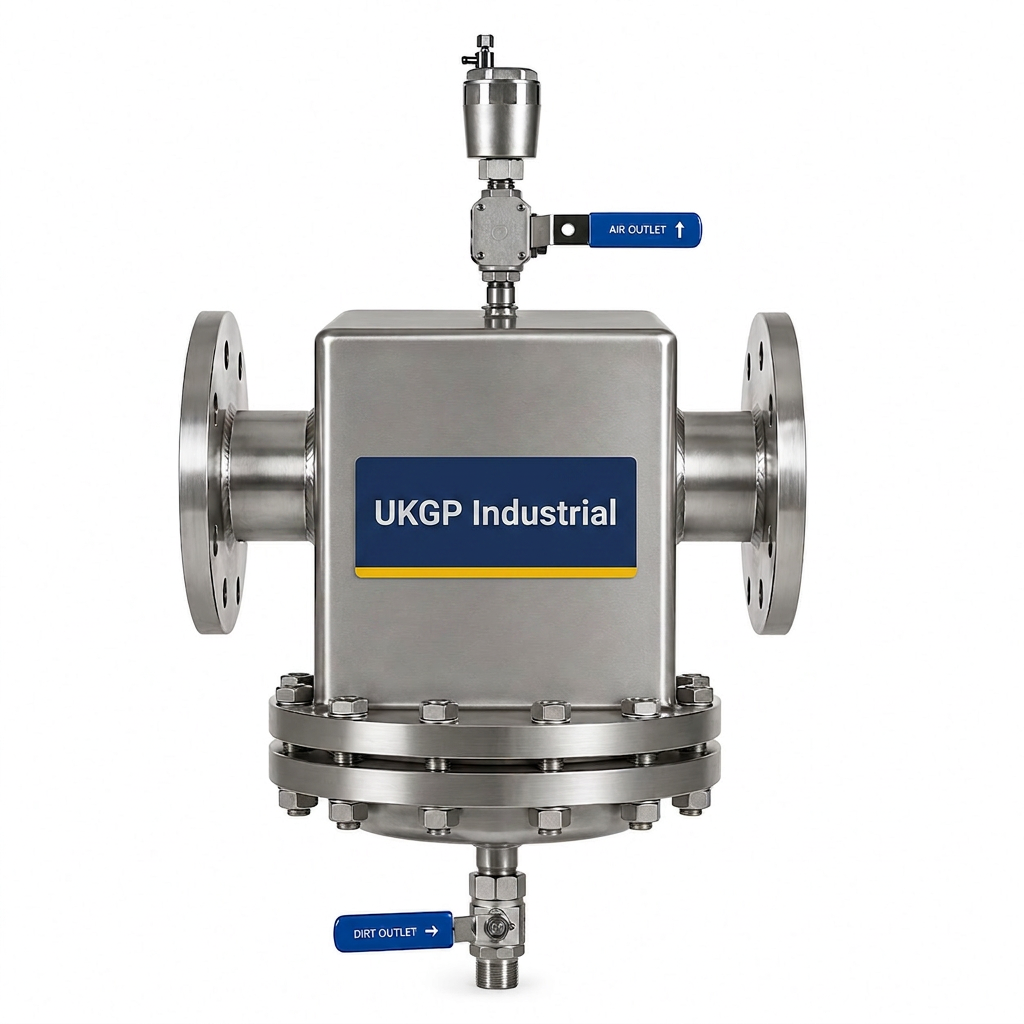
Conventional dirt separators operate primarily on the principle of velocity reduction and coalescence. By expanding the cross-sectional area of the flow path, the fluid velocity drops, allowing heavier particles to settle into a collection chamber via gravity. Most high-performance units utilise internal pall rings or stainless steel mesh media to create a quiescent zone, encouraging both dirt settlement and the release of micro-bubbles (deaeration).
While effective for sand, scale, and larger construction debris, non-magnetic units are limited by the laws of Stokes' Law. Very fine particles, particularly magnetite (black iron oxide), often remain in suspension due to the turbulence of the system. In systems governed by BSRIA BG29/21 pre-commission cleaning standards, relying solely on non-magnetic separation may lead to extended flushing times and failure to meet the required suspended solids limits.
- Capture of non-ferrous debris (solder, flux, copper shavings).
- Micro-bubble deaeration via internal media.
- Lower capital expenditure compared to magnetic counterparts.
The Case for Magnetic Augmentation
Magnetic separators introduce a high-power neodymium magnet, typically housed within a dry sleeve, into the flow path. This is not merely an 'extra' feature; it is a fundamental shift in filtration logic. Magnetite is the primary byproduct of internal corrosion in carbon steel systems. Because these particles are often smaller than 10 microns, they are effectively 'invisible' to gravity-based separators. A magnetic field exerts a force that overcomes the fluid's drag, pulling these fine particles out of the flow.
The importance of magnetic separation has grown alongside the adoption of high-efficiency, Electronically Commutated Motor (ECM) pumps. The permanent magnets within these pump rotors naturally attract magnetite, which can lead to premature bearing failure and rotor seizure. By installing a magnetic separator on the return pipework before the pumps, engineers provide a sacrificial point for magnetite accumulation, significantly extending the mean time between failures (MTBF) for modern plant.
- Capture of sub-micron magnetite particles.
- Protection of ECM permanent magnet pumps.
- Reduced risk of 'sludging' in control valves and heat exchangers.
BSRIA Compliance and System Cleanliness
BSRIA BG29/21 emphasises the necessity of removing suspended solids to prevent erosion and blockage. During the 'cleanliness' phase of a project, the presence of a magnetic dirt separator is a critical asset. It allows for the continuous removal of fine particles that traditional temporary strainers (often 800 microns or larger) simply cannot catch. Using a magnetic separator reduces the number of volume exchanges required during flushing, saving both time and water.
Under BG50 (Water treatment for closed-loop systems), the ongoing management of corrosion is paramount. Even with correct chemical dosing, 'flash' corrosion can occur during oxygen ingress or system top-ups. A combined air and dirt separator with a magnetic insert provides a passive, secondary line of defence, ensuring that any magnetite formed is sequestered before it can coat heat transfer surfaces, which would otherwise degrade the system's Delta T and overall COP.
- BG29/21: Focuses on pre-commission cleaning and the prevention of debris entry.
- BG50: Focuses on water treatment for closed systems in buildings, highlighting the risks of corrosion products.
Selection Criteria: Velocity and Pressure Drop Balancing
Specifying a separator requires careful consideration of the system's design flow rate. Most combined separators are rated for a maximum velocity of 1.5 m/s to 3.0 m/s. Exceeding these velocities prevents the quiescent zone from forming, rendering the gravity-based separation ineffective. When selecting a magnetic unit, the pressure drop (ΔP) is typically negligible, as the magnetic rod is positioned such that it does not significantly obstruct the cross-sectional area.
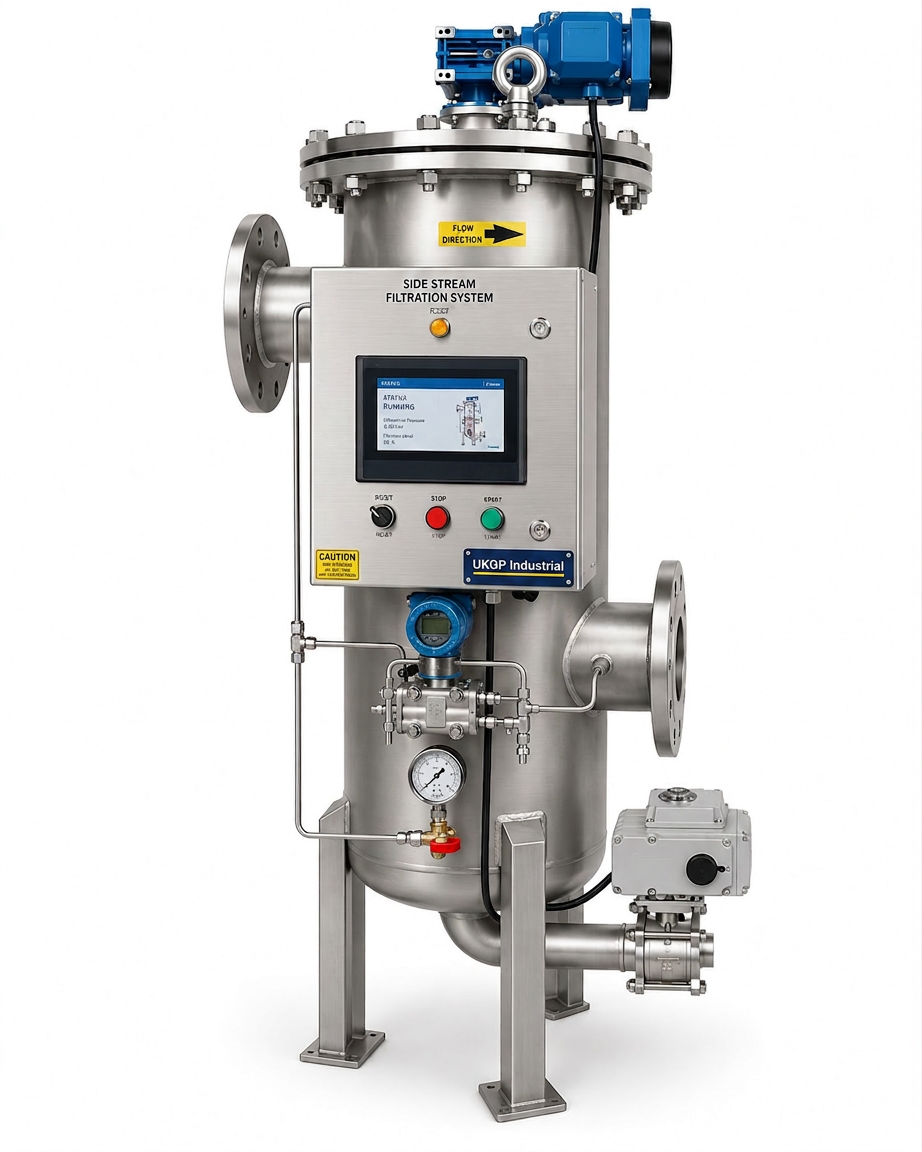
In larger commercial installations where pipe diameters exceed 300mm, or where the system volume is exceptionally high, full-flow separators may become prohibitively expensive or bulky. In such cases, building services engineers often specify side-stream filtration in conjunction with a primary deaerator. However, for most LTHW and CHW duties up to DN300, a full-flow magnetic combined air and dirt separator remain the most efficient method for maintaining system health.
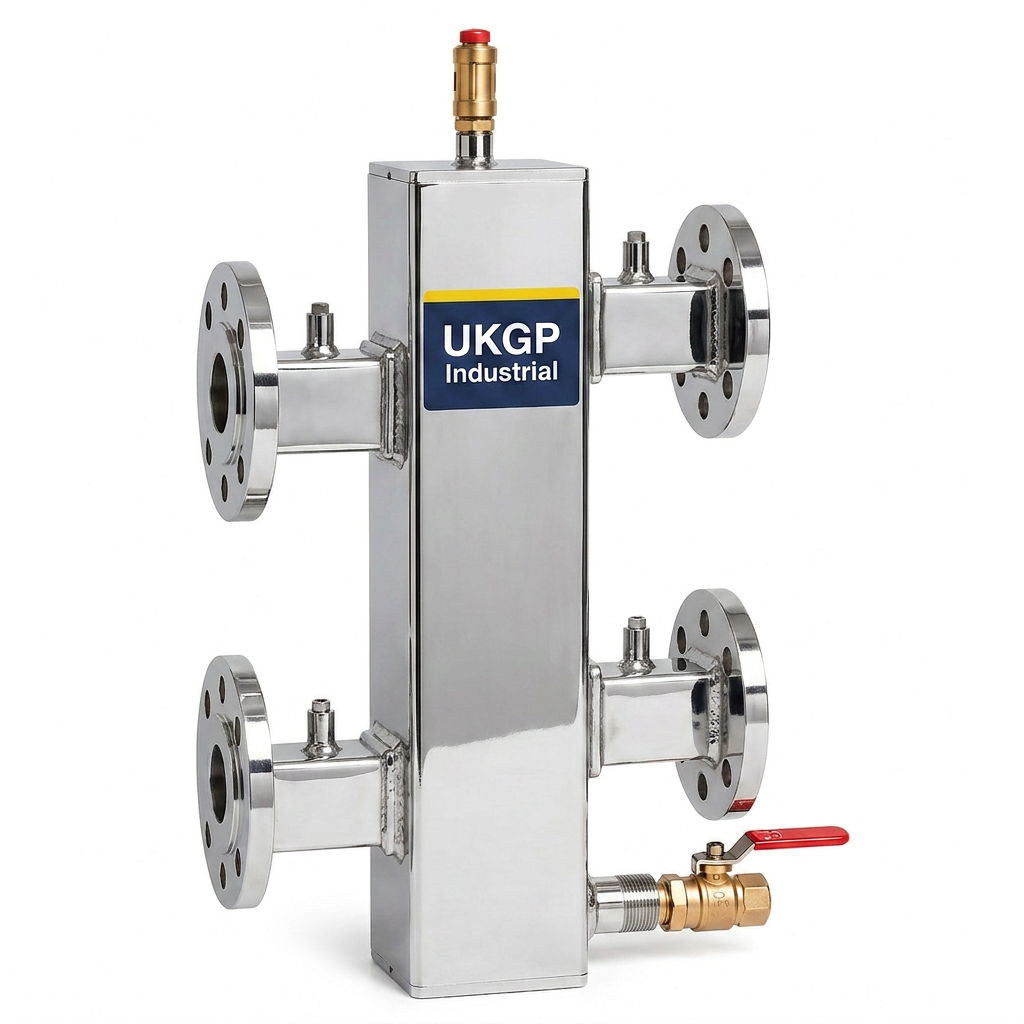
- Combined Air & Dirt (Magnetic): The gold standard for boiler/chiller plant rooms.
- Side-stream Filtration: Necessary for large-volume systems where full-flow filtration is impractical.
Installation and Maintenance Realities
A separator is only as effective as its maintenance regime. One of the primary advantages of modern magnetic separators is the 'dry' magnet design. The magnet is housed in a pocket, allowing it to be removed without depressurising the system. Once the magnet is withdrawn, the collected magnetite drops into the sump, where it can be blown down through a drain valve. This eliminates the need for the messy and time-consuming filter changes associated with cartridge-based systems.
For M&E contractors, the installation point is critical. Deaeration is most effective at the point of lowest solubility (highest temperature and lowest pressure). In LTHW systems, this is the flow pipework after the boiler. However, dirt separation is most critical before the boiler and pumps to protect them from return-side debris. In modern practice, the dirt separation function takes priority, and the unit is typically installed on the common return. If deaeration is the primary concern, separate units may be required, though a combined unit on the return is the standard compromise in the UK.
- Ensure the unit is installed on the return line to the heat source.
- Allow sufficient clearance for the removal of the magnetic rod.
- Incorporate a full-bore blow-down valve for debris discharge.
Frequently asked questions
Can I use a non-magnetic separator in a modern LTHW system?
- While magnetic separators are superior for magnetite, non-magnetic units are still essential for non-ferrous debris. However, in modern systems with high-efficiency pumps, magnetic filtration is considered best practice.
How often should magnetic rods be cleaned?
- Magnets should be inspected and cleaned during every planned preventative maintenance (PPM) visit, or more frequently during the initial 12 weeks of a new system's operation as per BG29/21.
Does magnetic filtration work in chilled water systems?
- Yes. Magnetic separators are effective in any closed-loop hydronic system where carbon steel components or cast iron radiators are present, provided the flow rate does not exceed the unit's design velocity.
What is the micron rating difference?
- A standard dirt separator typically captures particles down to 50 microns. A high-performance magnetic separator can capture sub-micron magnetite particles that would otherwise pass through a standard mesh or pall ring.