The Impact of Air and Suspended Solids on System Efficiency
The presence of microbubbles and suspended solids—primarily magnetite and hematite—remains one of the leading causes of premature plant failure in the UK commercial sector. Air in a closed-loop system acts as an insulator, reducing the heat transfer coefficient of emitters and heat exchangers. In chilled water (CHW) systems, entrained air can significantly increase the energy consumption of chillers as the system struggles to maintain the required temperature differential.
From a mechanical perspective, air promotes the oxidation of ferrous components, leading to the formation of magnetite. These fine particles, often measuring less than 10 microns, circulate through the system, causing abrasive wear on pump impellers and blocking the narrow plate-to-plate channels of modern Heat Interface Units (HIUs) and boiler heat exchangers. BSRIA BG29/21 emphasizes that maintaining water cleanliness from the pre-commissioning stage is critical to preventing these long-term operational issues.
- Reduction in thermal conductivity across heat exchangers.
- Accelerated corrosion of steel components via oxygen ingress.
- Cavitation in circulators leading to mechanical seal failure.
- Erroneous readings from flow meters and ultrasonic sensors.
Mechanics of Coalescing Media Technology
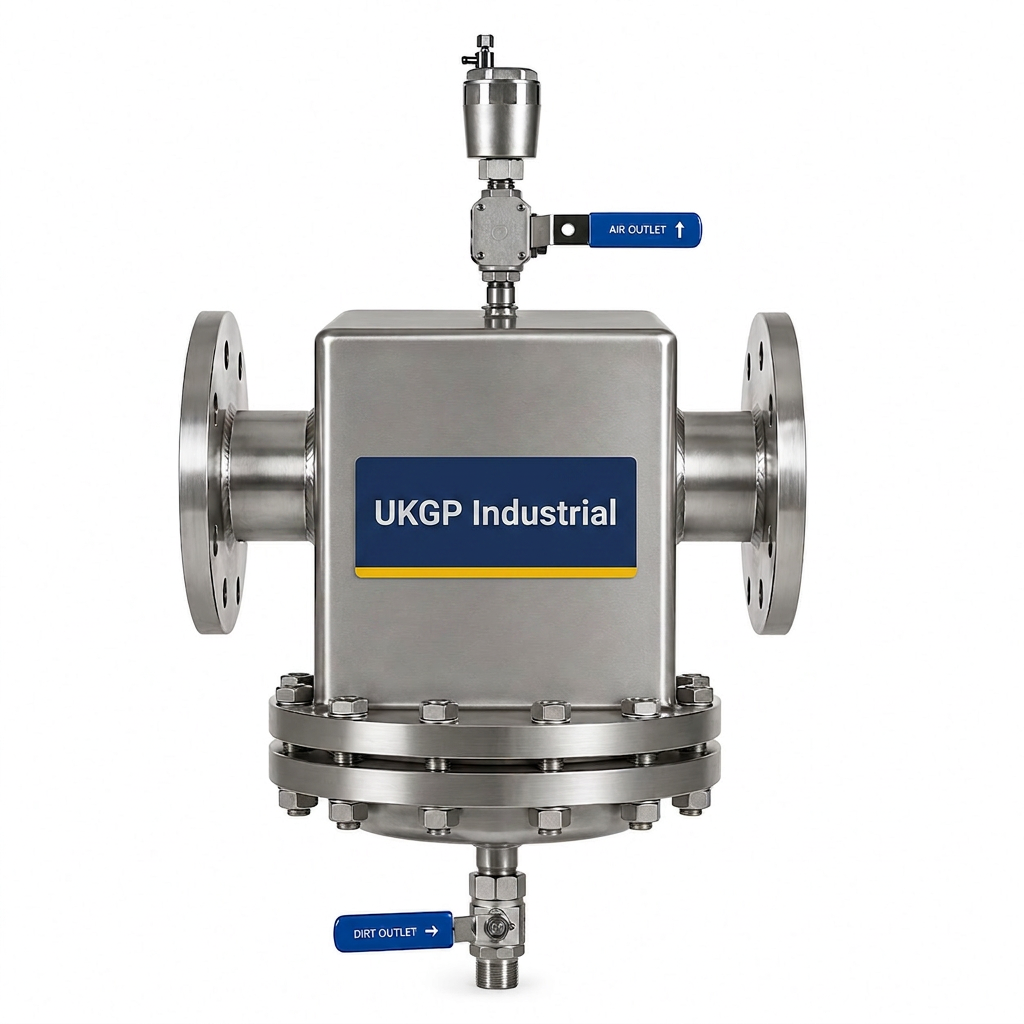
Coalescing media operates on the principle of surface area and velocity reduction. Unlike simple centrifugal or cyclonic separators, which rely solely on density differences and high-velocity paths, a coalescing separator utilizes a static internal matrix—often made of stainless steel mesh or specialized plastic filaments. This matrix creates a 'stagnant zone' within the main flow path. As water passes through the media, microbubbles collide with the surface and adhere to it. Through the process of coalescence, these tiny bubbles merge into larger bubbles until they gain sufficient buoyancy to rise into the air chamber for venting.
Simultaneously, the media acts on suspended solids. As fluid velocity drops within the separator body, particles lose kinetic energy. The coalescing media provides a surface for these particles to collide and aggregate, eventually falling into the collection chamber at the base of the unit. This dual-action approach ensures that even the smallest contaminants, which would otherwise remain in suspension, are effectively removed from the circulating fluid without the need for high-maintenance disposable filters.
BSRIA BG29/21 and BG50 Compliance
For building services engineers, adherence to BSRIA guidelines is the benchmark for system integrity. BG29/21 (Pre-commissioning Cleaning of Pipework Systems) and BG50 (Water Treatment for Closed Heating and Cooling Systems) both advocate for robust filtration and separation strategies. Coalescing separators are integral to meeting the 'System Cleanliness' requirements set out in these documents, particularly during the initial bypass-flushing and early operational phases.
While chemical treatment is essential for corrosion inhibition, it cannot magically remove existing debris or air. Mechanical separation via coalescing media provides a continuous 'polishing' effect. By removing the oxygen and the metallic particles that act as a catalyst for further corrosion, these units assist facilities managers in maintaining the water chemistry parameters defined in BS 8552, ensuring that the system remains within the recommended limits for iron and copper content over its life cycle.
Optimising Installation for Maximum Separation
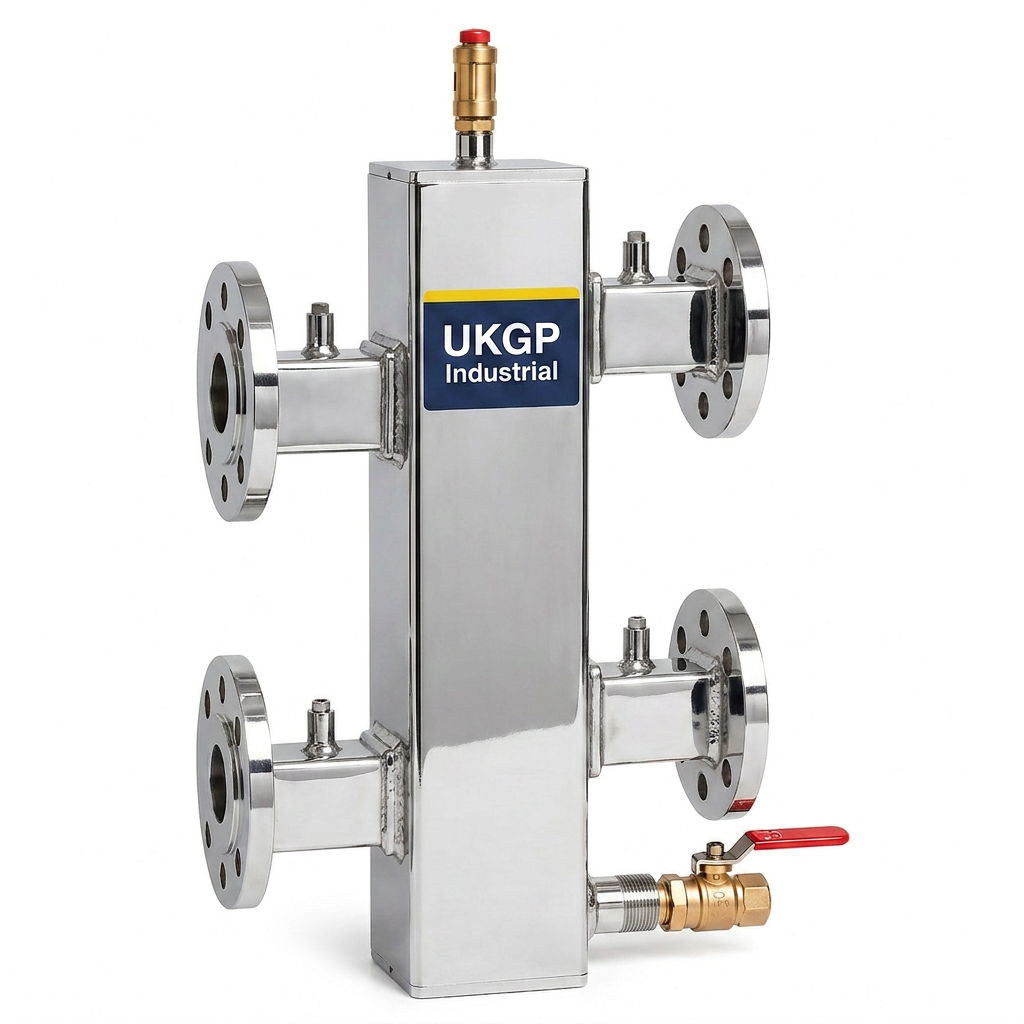
The effectiveness of a coalescing air and dirt separator is heavily influenced by its position within the hydraulic circuit. For air removal, Henry’s Law dictates that air is most easily released from water where the temperature is highest and the pressure is lowest. Consequently, in an LTHW system, the separator should be installed on the flow pipe, immediately downstream of the boiler or heat exchanger. In a CHW system, the separator is ideally placed on the return header before the chiller, where the water is at its warmest.
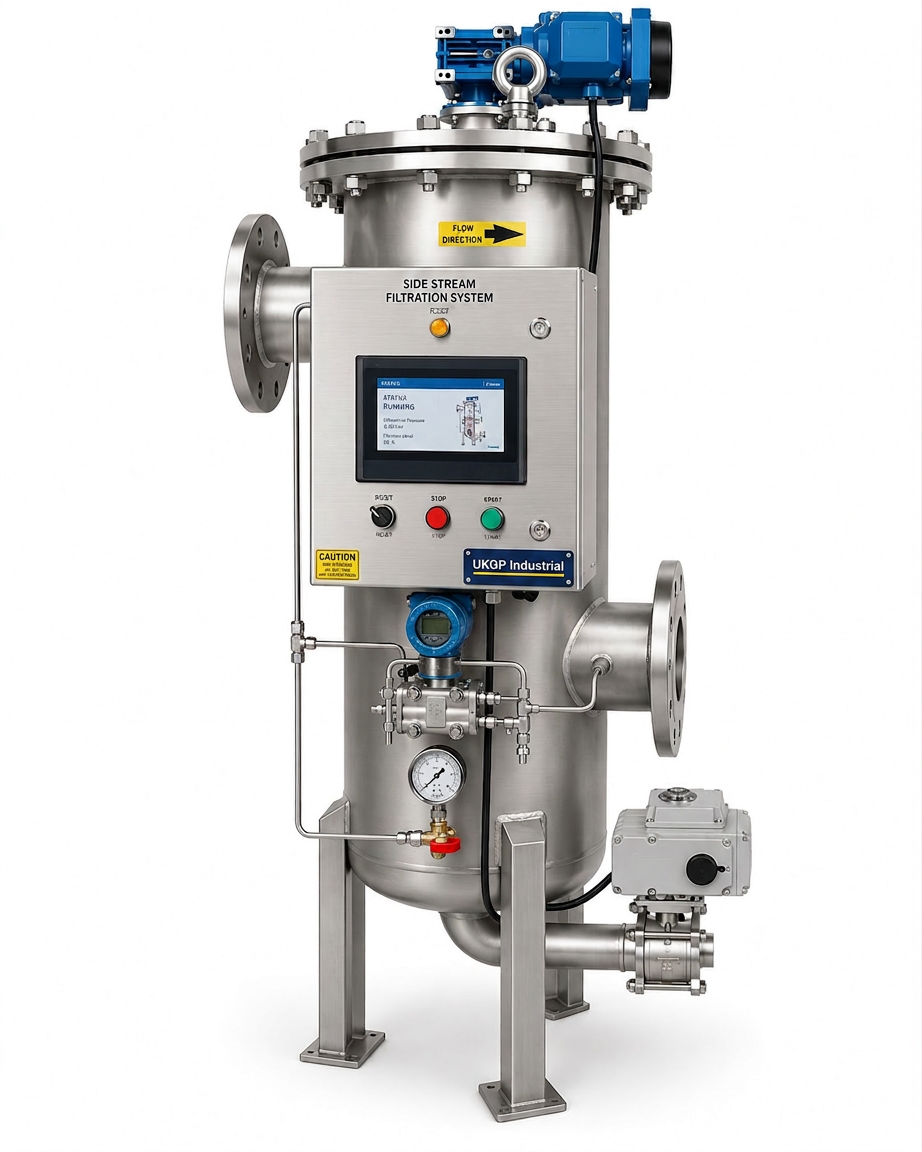
When considering dirt removal, the separator must handle the full system flow to be most effective. However, in larger industrial systems or those with high levels of existing contamination, engineers often specify side-stream filtration in conjunction with main-line separators. This 'belt and braces' approach ensures that while the main coalescing unit manages microbubbles and bulk debris, a side-stream unit can provide finer filtration and chemical dosing capabilities, providing a comprehensive solution for complex plant rooms.
Maintenance and Long-Term Reliability
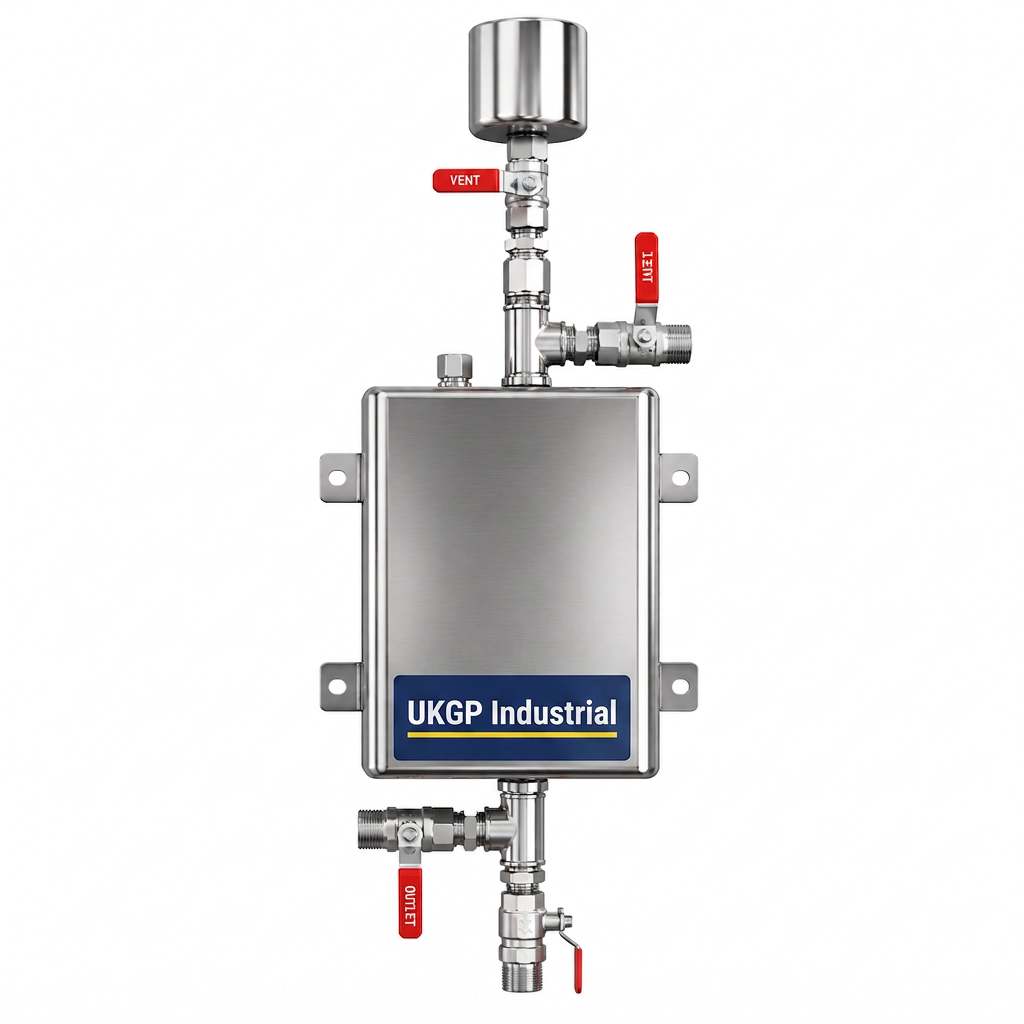
One of the primary advantages of coalescing media separators over traditional strainers is the ease of maintenance. A standard Y-strainer requires system isolation and physical removal of the mesh for cleaning, a task that is frequently neglected in busy plant rooms. In contrast, coalescing dirt separators are designed for 'blow-down' maintenance. By opening a drain valve at the base of the unit while the system is under pressure, collected sludge is flushed out in seconds without interrupting service.
UKGP Industrial air and dirt separators are engineered to ensure that gravity does the heavy lifting. The collection chamber is located outside the main flow path to prevent the re-entrainment of captured particles. For engineers and contractors, this means reduced call-outs for blocked valves and sensors, and for the end-user, it ensures that the system’s design efficiency is maintained for the duration of its service life. Regular blow-down intervals should be scheduled as part of the SFG20 maintenance regime to ensure the collection chamber does not become over-filled.
Material Selection and Pressure Ratings
Specifications for coalescing separators must account for the operating environment. Standard commercial units are typically rated for 10 bar or 16 bar operation, with maximum temperatures ranging from 110°C to 120°C. For deeper plant rooms or high-rise applications, PN25 rated units may be required. The separator body is usually constructed from carbon steel or stainless steel, with the internal coalescing media itself ideally being made of AISI 304 or 316 stainless steel to prevent corrosion of the filter element itself.
When selecting a unit, engineers must also consider the flange or thread connections in accordance with BS EN 1092-1. Sizing should be based on the peak volumetric flow rate (m³/h) rather than simple pipe size to ensure the internal velocity does not exceed the media's capacity to facilitate coalescence. Units should be specified with an integrated automatic air vent (AAV) and a high-capacity drain valve to facilitate efficient commissioning and ongoing operation.
Frequently asked questions
What is the optimum location for a combined air and dirt separator?
- Ideally, combined separators should be installed on the flow pipe where temperature is highest and pressure is lowest (typically after the boiler or heat exchanger), as this is where air solubility is lowest and microbubbles are most likely to form.
How do coalescing media effectively remove microbubbles?
- Microbubbles are tiny bubbles (typically <0.1mm) that do not rise quickly enough to be caught by standard air vents. Coalescing media slows the flow and provides a surface for these bubbles to merge into larger, buoyant bubbles that can be vented.
Which BSRIA guides apply to dirt separation and system cleanliness?
- BSRIA BG29/21 provides guidance on pre-commissioning cleaning, while BG50 focuses on water treatment for closed systems. Both highlight the necessity of high-efficiency dirt removal to prevent erosion, deposition, and micro-biological growth.
What is the typical pressure drop across a coalescing air and dirt separator?
- Pressure drop varies by model and flow rate, but high-quality separators are designed for low resistance. Typically, a pressure drop of between 0.05 and 0.2 bar is expected at nominal flow rates.