Identifying System Performance Degradation
When a closed-loop system begins to exhibit signs of inefficiency, the air and dirt separator should be the first point of audit. In accordance with BSRIA BG50, the presence of dissolved gases and suspended solids is the primary driver of internal corrosion and component wear. If the separator is not functioning correctly, these contaminants circulate unchecked, leading to a build-up of magnetite sludge which increases the system's dynamic head and reduces thermal transfer efficiency.
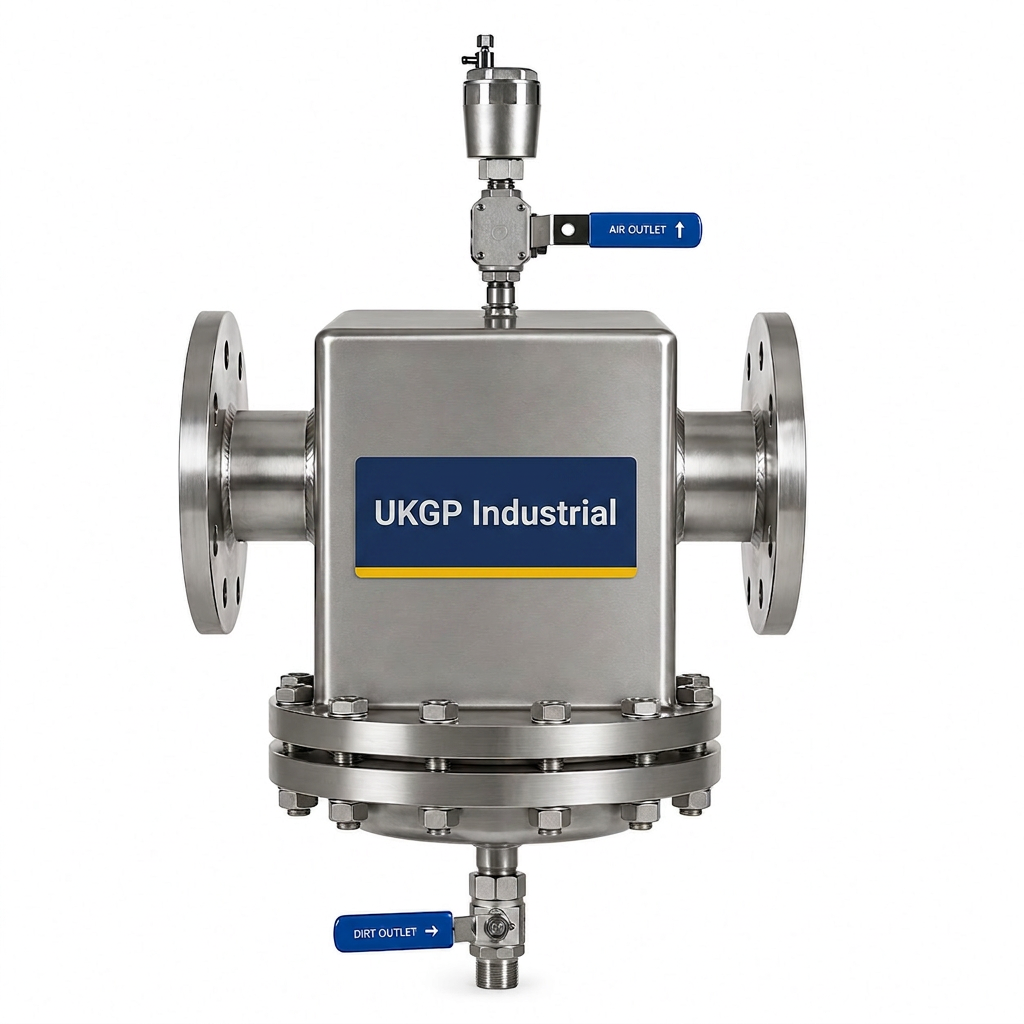
Troubleshooting begins with a physical inspection of the unit and its associated blow-down valves. A paradox in system management is that a 'clean' blow-down—where the water runs clear immediately—is often a sign of failure rather than success if the system water elsewhere shows high turbidity. This usually indicates that the internal pall rings or stainless-steel mesh elements are blinded by debris or that the flow velocity through the unit has exceeded its rated capacity, preventing particulate settlement.
- Excessive noise (gurgling or cavitation) at the pump.
- Cold spots in terminal units or heat emitters despite high flow temperatures.
- Repeated 'low flow' faults on modern, high-turnover condensing boilers.
- Premature failure of mechanical pump seals due to abrasive magnetite.
Frequently asked questions
What is the typical pressure drop across a standard air and dirt separator?
- Pressure drop varies by size and flow rate, but a healthy, clean unit should typically exhibit a differential between 1.5 kPa and 5.0 kPa. If Delta-P exceeds 10 kPa, it indicates severe internal fouling or that the unit is undersized for the system flow rate (m³/h).
Can a separator replace a side-stream filter?
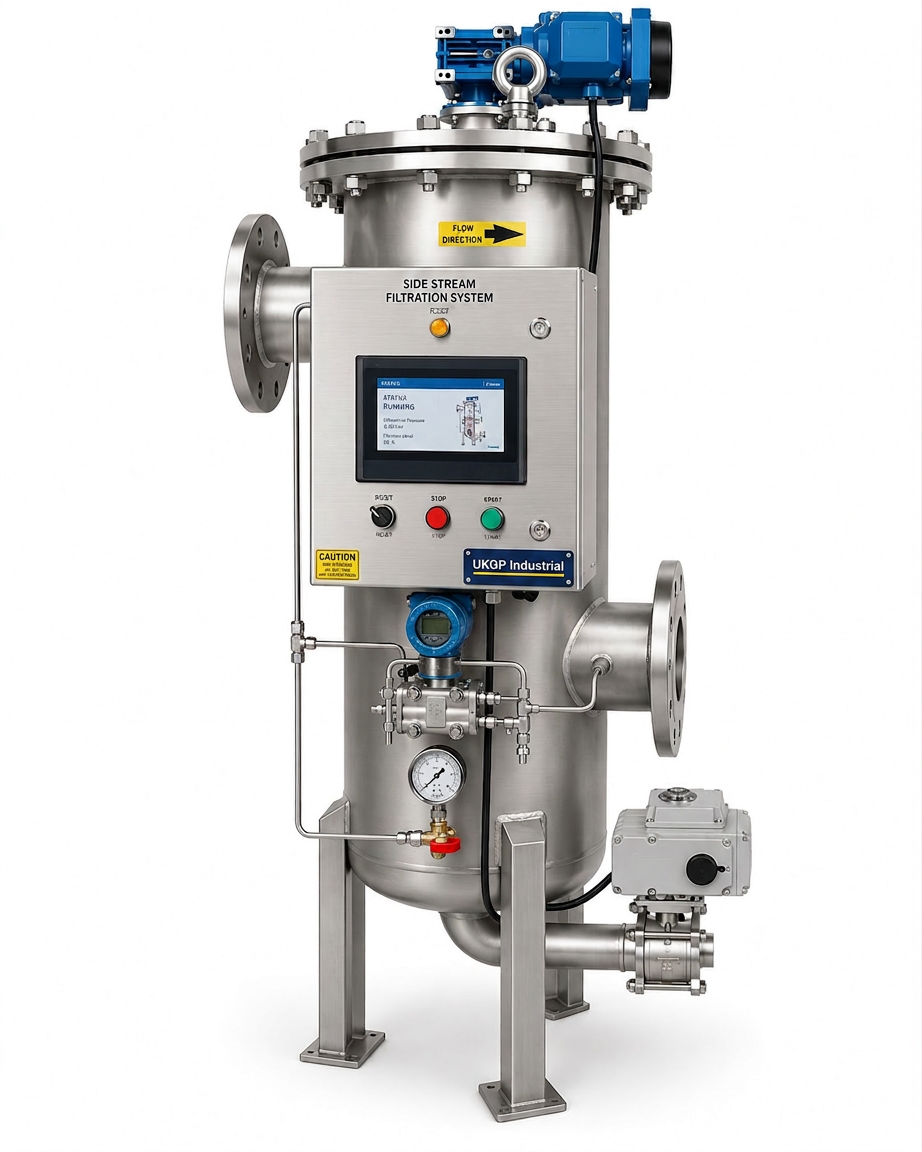
- While UKGP Industrial air and dirt separators capture particles down to five microns, they are points-of-protection. For total system cleanliness in high-volume circuits (especially those with sensitive plate heat exchangers), side-stream filtration should be used to provide continuous, high-turnover fluid polishing alongside the separator.
Why am I still finding air in my radiators despite having a separator installed?
- Microbubbles are often released at the point of lowest solubility—typically the point of highest temperature and lowest pressure. If your separator is situated on the Return (cold) leg of an LTHW system, it will be significantly less effective at removing dissolved gases than a unit placed on the Flow.
What if the separator is venting fluid instead of air?
- Check the system static pressure at the unit's location. If the pressure at the separator head is too high (typically above 3-4 bar depending on the specific model's float assembly), microbubbles may stay in solution rather than being released through the automatic air vent. In very high-rise buildings, deaeration may be required at the top of the risers rather than just the plant room.