Principles of Deaeration and Dirt Separation
The physics of gas solubility in water is governed by Henry’s Law, which states that the amount of dissolved gas in a liquid is proportional to its partial pressure. In a commercial heating circuit, gases are most likely to come out of solution (forming microbubbles) where the pressure is lowest and the temperature is highest. Consequently, installing a deaerator anywhere other than the pump suction—where the static and dynamic pressures are at their ebb—significantly reduces the unit's efficiency.
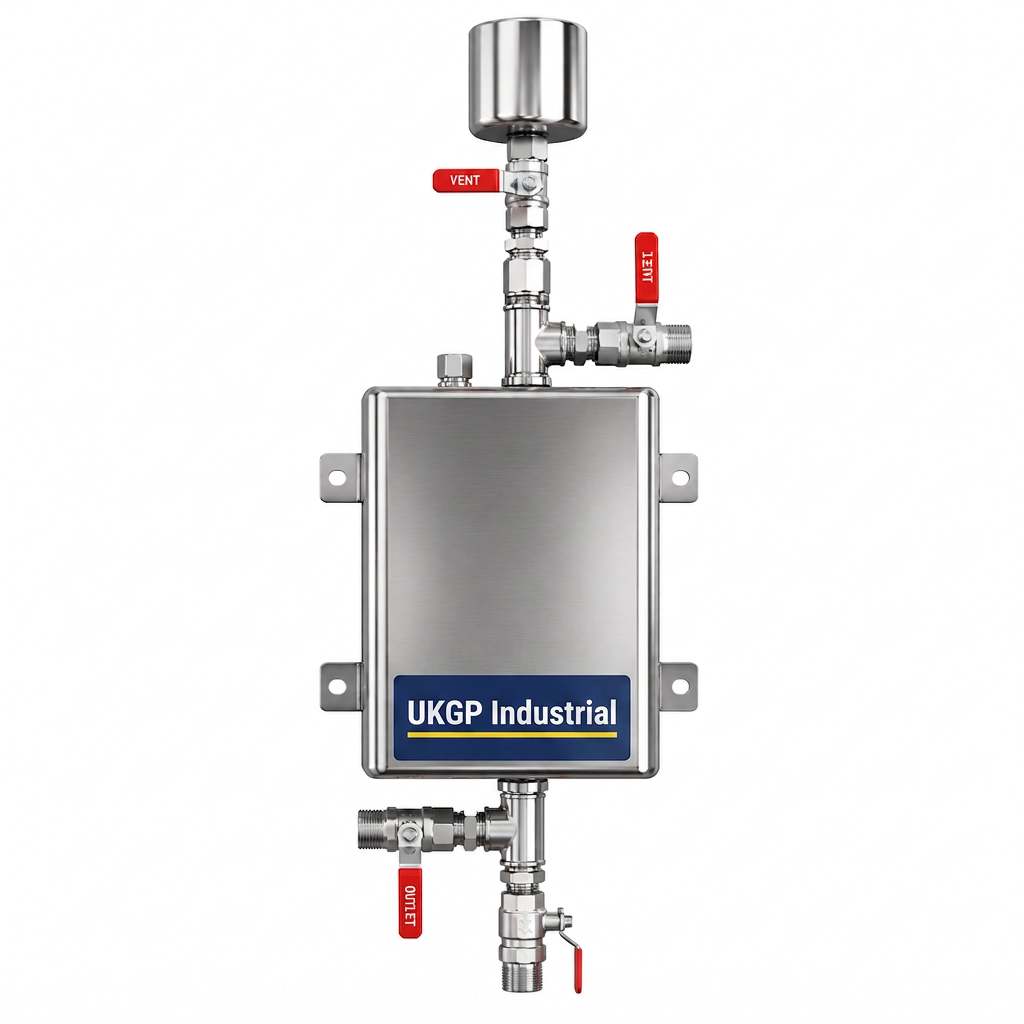
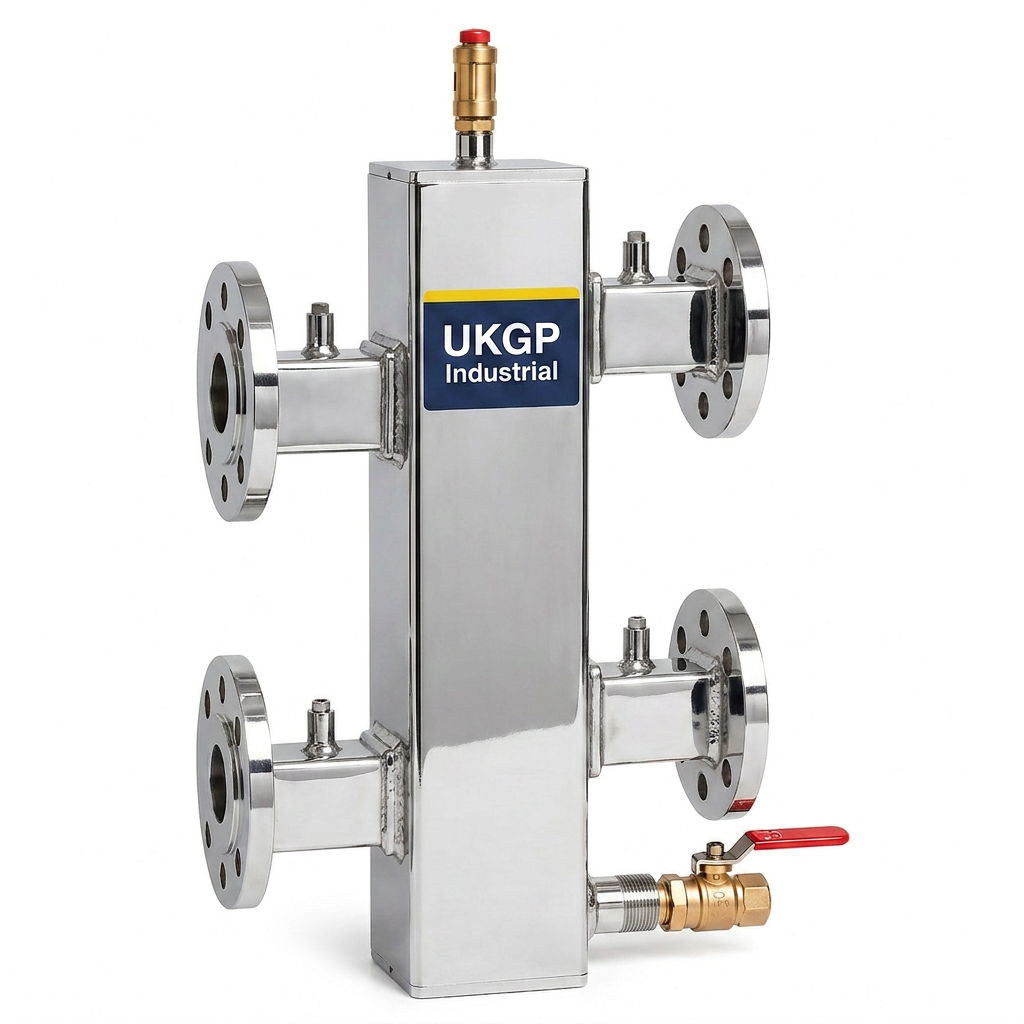
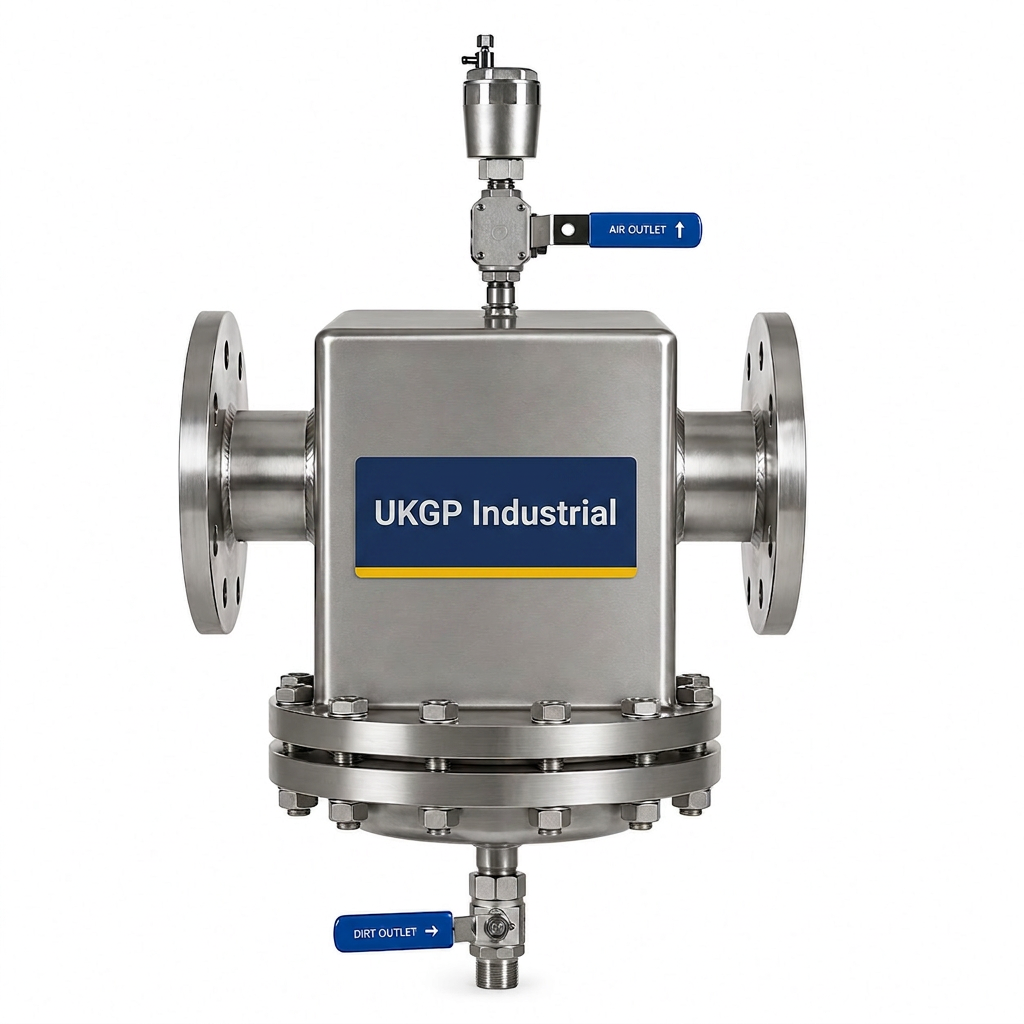
Simultaneously, the 'dirt' element of the separator relies on a reduction in flow velocity. As the fluid enters the larger diameter vessel of the separator, the velocity drops, allowing suspended solids and magnetite to settle. Modern units, such as those in the UKGP Industrial range, utilise internal media—often a pall ring or stainless steel wire structure—to create a laminar flow zone that assists both the coalescence of microbubbles and the precipitation of heavy particles.
Failure to address these contaminants leads to accelerated mechanical seal wear, radiator cold spots, and fouled heat exchangers. By integrating a combined unit at the pump suction, engineers protect the most expensive mechanical asset in the plant room: the pump set.
- The point of lowest pressure in the system (typically the pump suction).
- The point of highest temperature (the flow pipework in heating systems).
- Adequate clearance for the removal of the magnet assembly and bottom blow-down.
- Proximity to a floor drain or tundish for safe discharge.
Pre-Installation Checklist and Sizing
Before the first pipe cut is made, the engineer must verify that the separator is sized according to flow rate (m³/h) rather than simply matching the pipe diameter. Oversizing a separator is rarely an issue, but undersizing leads to excessive pressure drops and high-velocity 'carry-over' where the fluid moves too quickly for microbubbles to rise or dirt to settle. Refer to technical data sheets to ensure the pressure drop at peak flow does not exceed 0.1 to 0.2 bar.
The physical footprint of the unit must also be considered. Combined air and dirt separators are taller than standard strainers. There must be sufficient overhead clearance to allow the automatic air vent (AAV) to function and be serviced, and at least 300mm to 500mm of clearance below the drain valve for the removal of any magnetic rods or the connection of a hose for flushing.
- Check the pipework diameter vs the unit flange/thread size.
- Confirm the maximum operating pressure and temperature ratings match the system design.
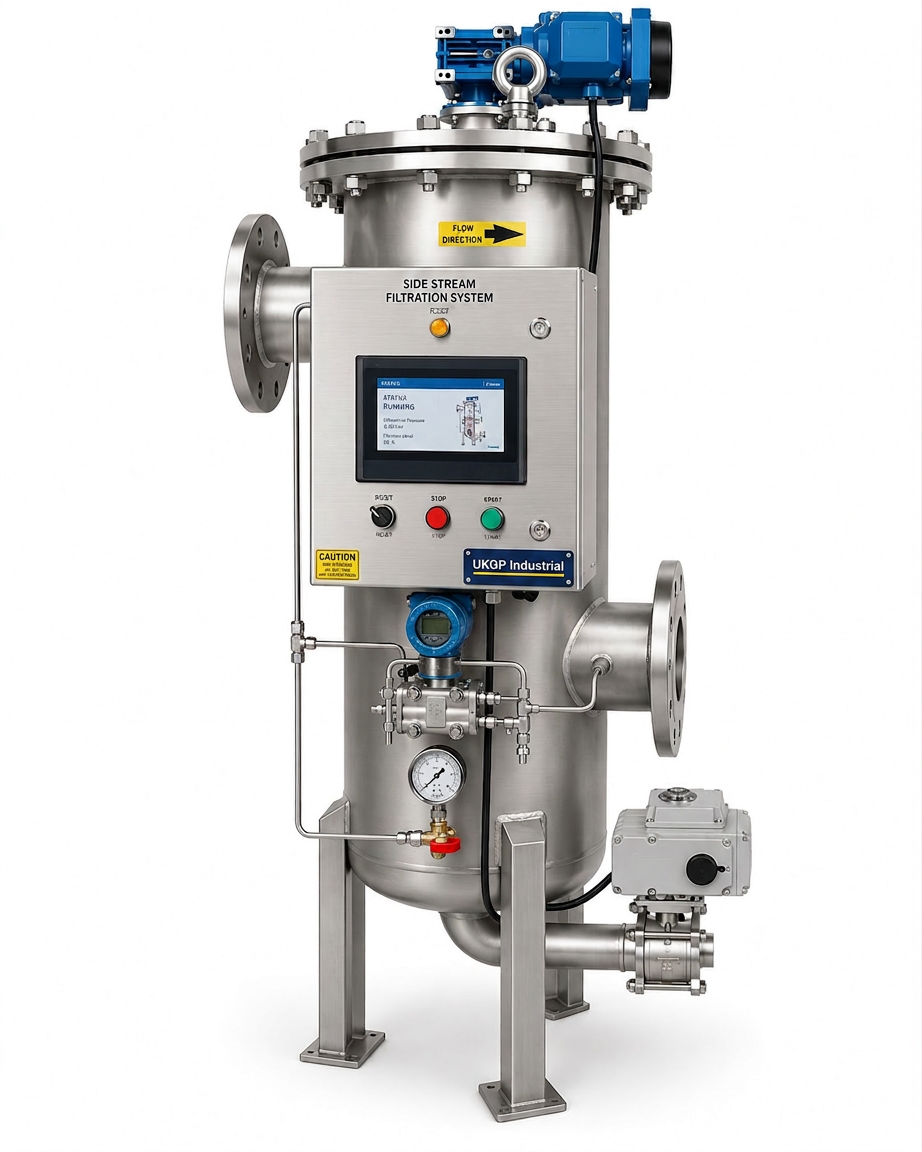
- Ensure the flow direction arrow on the vessel matches the system flow.
- Verify that the mounting bracketry or plinth is sufficient for the wet weight of the unit.
Frequently asked questions
How often should the manual blow-down valve be operated?
- Standard BSRIA BG29/21 guidance suggests cleaning intervals should be based on pressure drop or visibility in a sight glass, but for new systems, weekly checks during the first month are recommended, transitioning to quarterly thereafter.
Can I install the separator on the pump discharge if space is limited?
- While it will capture dirt, the deaeration function is compromised. Microbubble liberation is most effective at the highest temperature and lowest pressure point; moving it to the discharge side increases the pressure, keeping gases in solution.
Is a Y-strainer a suitable alternative to an air and dirt separator?
- Microbubbles are approximately 10 to 40 microns in size. Standard Y-strainers typically utilize 800-micron meshes, which are incapable of stopping microbubbles or fine magnetite sludge.
Are these units compatible with glycol-enhanced chilled water systems?
- Yes, provided the unit is rated for the system's glycol concentration (often up to 50%). Note that glycol increases fluid viscosity, which may slightly increase the pressure drop across the internal pall ring or mesh medium.