Routine Operations and Monthly Inspections
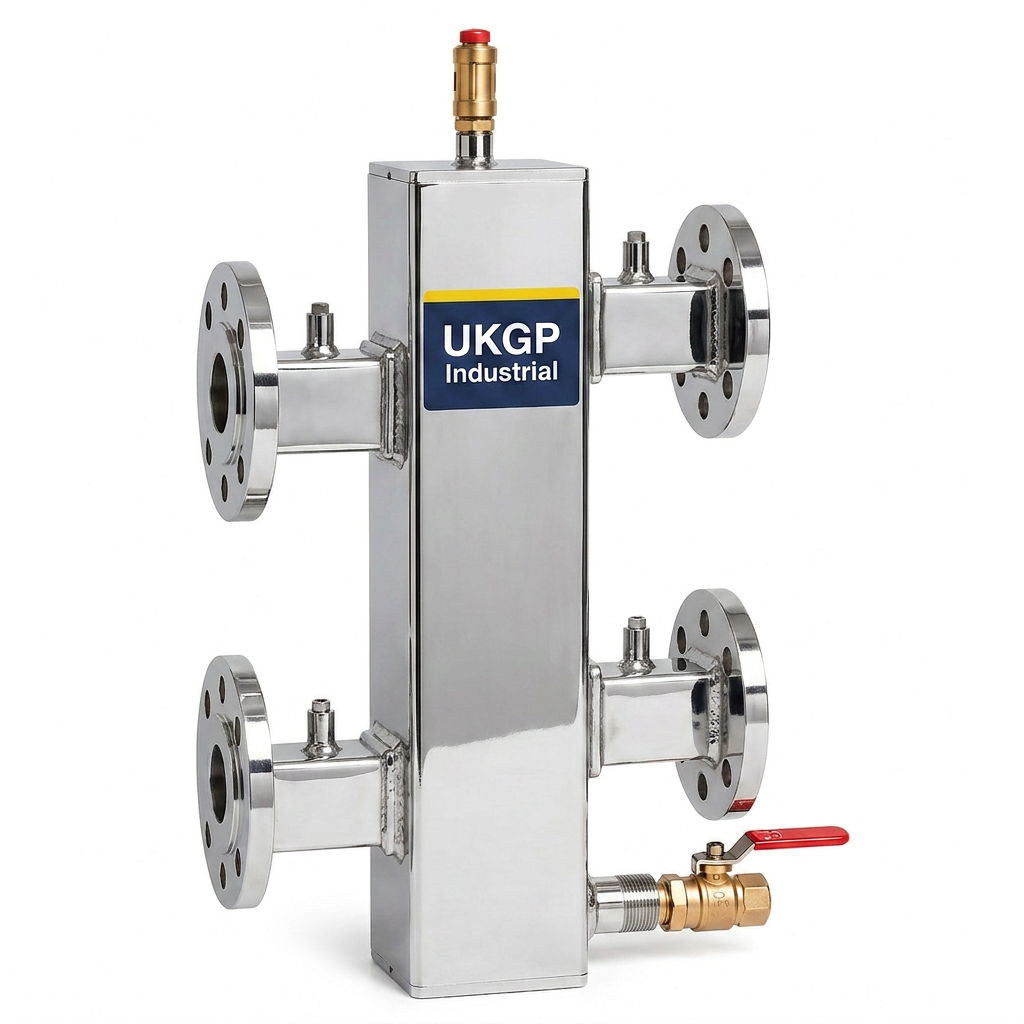
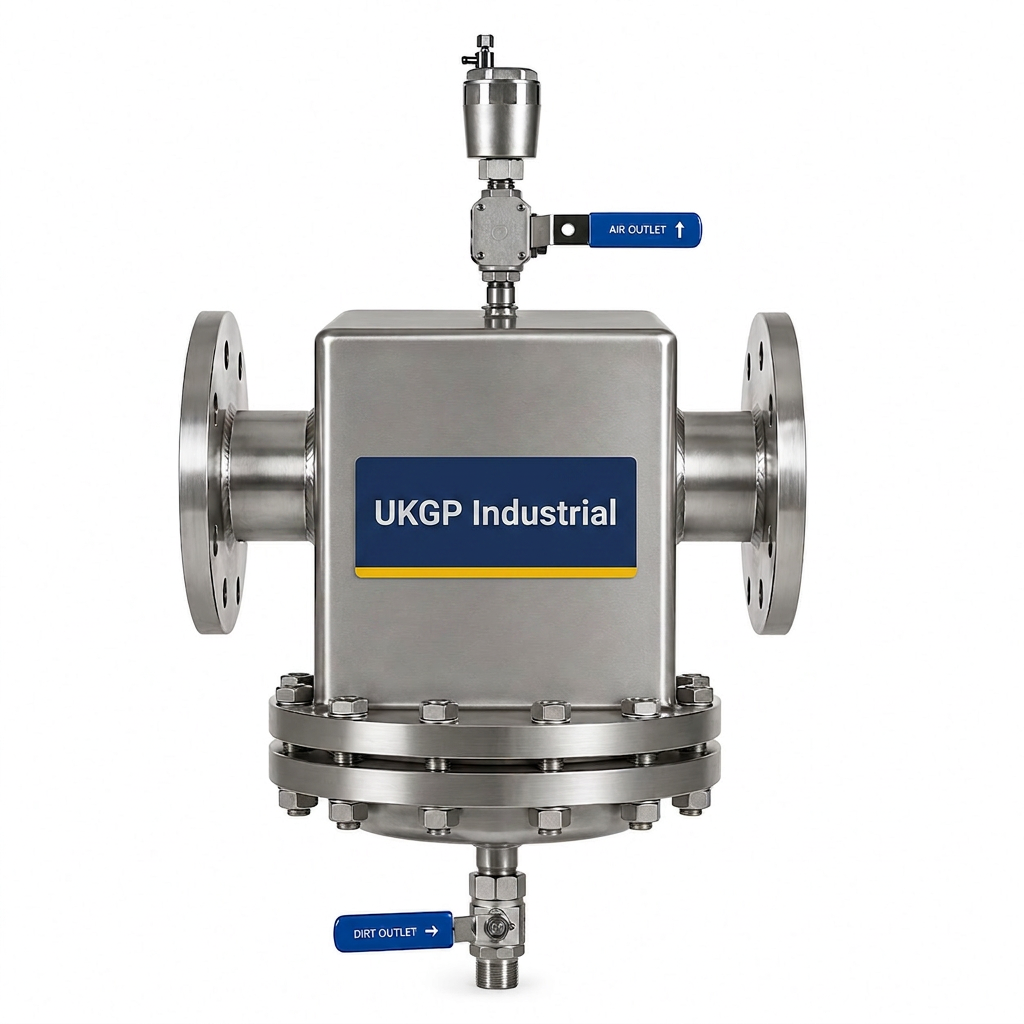
During the initial post-commissioning phase, air and dirt separators require frequent attention. BSRIA BG29/21 emphasizes that system cleanliness is a continuous process, not a one-time event. In the first three months of operation, the blow-down valve at the base of the separator should be operated weekly. This ensures that heavy particles settled at the bottom of the vessel are evacuated before they can become compacted or re-entrained into the flow.
Maintenance personnel must observe the colour and clarity of the discharge. If the water remains heavily fouled with magnetite or suspended solids, the frequency of blow-down should be maintained at weekly intervals. In stable, mature systems, this can typically be reduced to a monthly or quarterly check. It is vital to remember that each blow-down event introduces a small amount of raw make-up water; therefore, excessive flushing without commercial justification should be avoided to prevent oxygen ingress.
- Check for signs of weeping or leakage at the air release nipple.
- Verify that the manual isolation cap on the air vent is loose (it must be open to vent air).
- Inspect the vessel body for external corrosion or insulation degradation.
- Monitor pressure drop across the unit; an unexpected increase may indicate a blocked internal Palladium or PALL ring media.
Annual Service and Internal Verification
The annual maintenance visit must go beyond a simple flush. The integrity of the internal coalescing media—whether it be a stainless steel mesh, PALL rings, or a spiral structure—must be considered. While most high-quality UKGP Industrial air and dirt separators are designed to be self-cleaning through the blow-down process, a significant system upset (such as a pump failure or major leak) can lead to the internal media becoming blinded by scale or excessive flux residues.
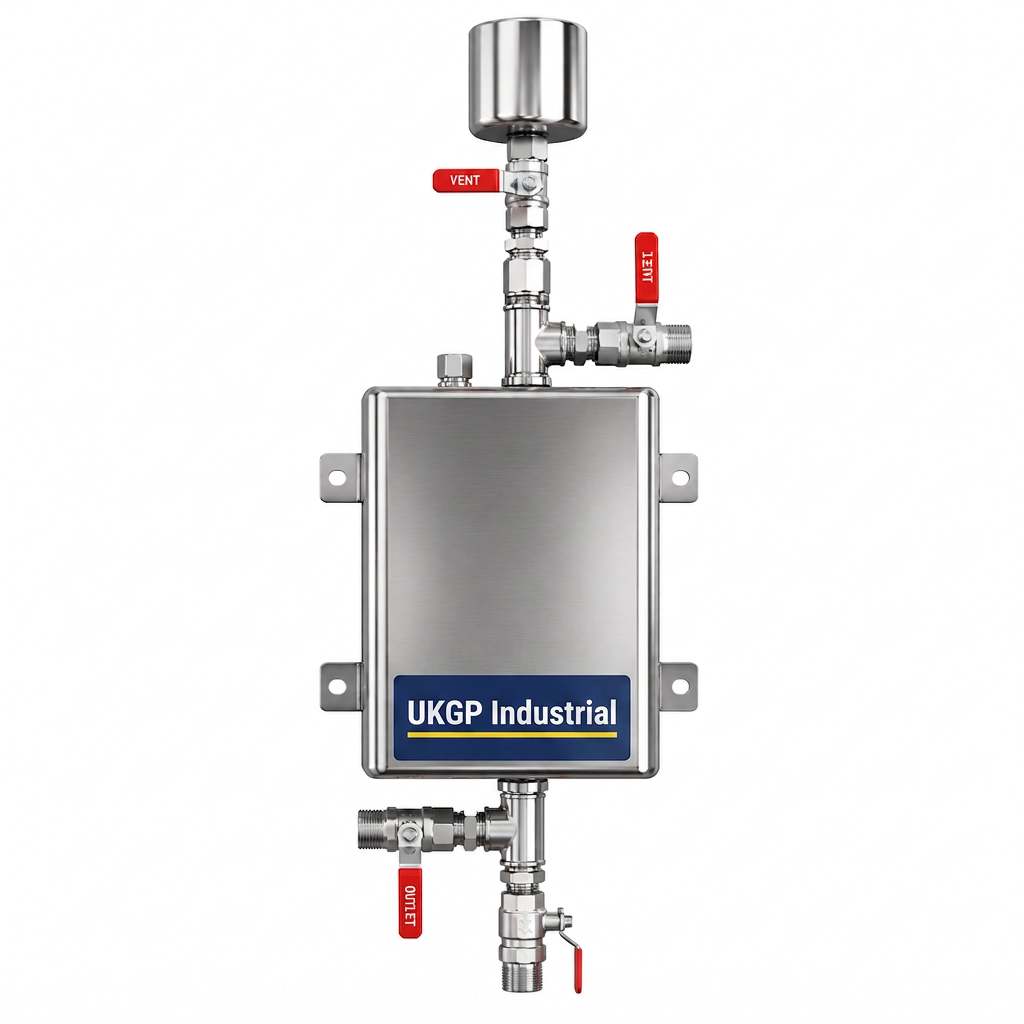
During the annual shutdown, the automatic air vent (AAV) mechanism at the top of the unit should be inspected. These vents operate using a float and needle valve assembly. Over time, the valve seat can become encrusted with system minerals or inhibitors, leading to either a 'locked' state where air cannot escape, or a 'weeping' state where water leaks. Engineers should clean the seat or replace the AAV head if any calcification is present. Testing the AAV involves manually depressing the internal float (where possible) or checking for the presence of air at high-point vents further downstream.
Magnetite Management and Probe Maintenance
For separators equipped with integrated magnetic rods, maintenance is more intensive. Magnetite (black iron oxide) is a major bypass risk for standard centrifugal separators. If the unit features a removable magnetic sleeve, this must be withdrawn during the annual service. The 'dry' magnetic core is removed first, allowing the captured magnetite to fall into the collection chamber for blow-down, or the entire sleeve is cleaned manually.
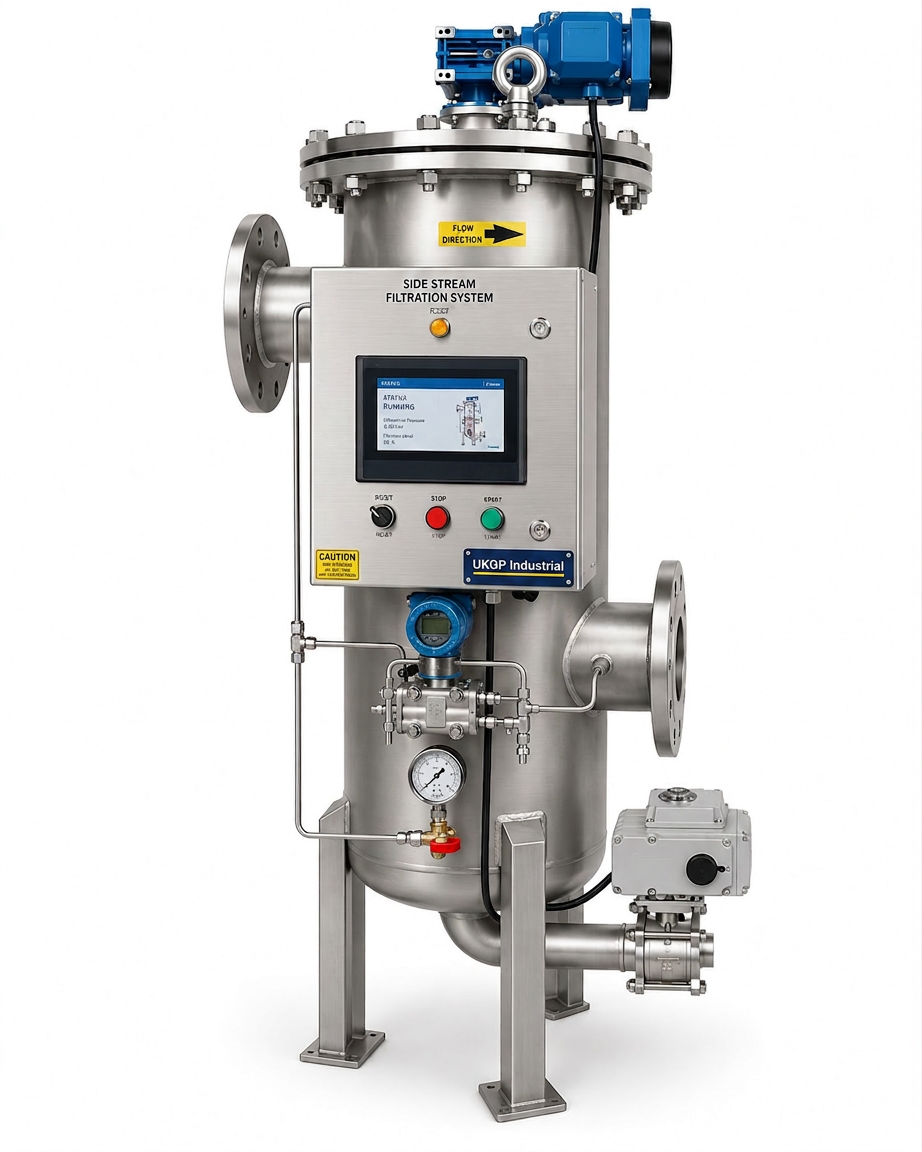
Failure to clean magnetic inserts leads to saturation. Once the magnetic field is 'full' of particles, it no longer effectively captures new magnetite entering the unit. In systems with high concentrations of black sludge, the separator should be paired with side-stream filtration to ensure sub-micron particles are addressed, as standard separators typically only capture particles down to 50 microns. Verification of the magnetic strength and physical integrity of the probe is a critical annual task.
Deaeration Efficiency and System Pressurisation
A separator's ability to remove microbubbles is intrinsically linked to system pressure and temperature. According to Henry’s Law, air is less soluble in warmer water and at lower pressures. Maintenance engineers must verify that the separator is installed at the hottest point of a heating system (the flow) and the coolest point of a chilled water system (the return), and that the system static pressure is maintained according to the design specification.
If the system pressurisation unit is failing to maintain the minimum head, the separator’s deaeration capabilities are compromised. During the maintenance cycle, check the expansion vessel pre-charge and the pressurisation unit's operation. If air continues to accumulate in terminal units despite the separator being clear, it often indicates that the system pressure is dropping below the vaporisation point or that the separator is incorrectly positioned relative to the pump's 'point of no pressure change'.
Compliance and Documentation Requirements
Documentation is the cornerstone of BSRIA compliance. Every maintenance action—from a 10-second blow-down to a full AAV replacement—must be recorded in the plant room logbook. This audit trail is essential for warranty claims and for troubleshooting recurring water quality issues. The log should record the date, the duration of the flush, and a subjective assessment of the water quality (e.g., 'clear', 'slight discolouration', or 'heavy magnetite').
Furthermore, water samples should be taken annually and sent to a UKAS-accredited laboratory for analysis. The results should be compared against the baseline readings established during commissioning. If the iron or copper levels are rising despite the presence of a separator, it indicates that the unit is not being maintained correctly or that the chemical inhibitor levels have depleted, leading to active corrosion that outpaces the separator's removal rate.
- BS 7593:2019: Code of practice for the preparation, commissioning and maintenance of domestic central heating and cooling water systems (often applied to light commercial).
- BSRIA BG50/2021: Water treatment for closed heating and cooling systems.
- BSRIA BG29/2021: Pre-commission cleaning of pipework systems.
- CIBSE Guide W: Water Distribution Systems.
Frequently asked questions
How often should I flush the dirt separator?
- While dependent on system condition, the discharge valve should be opened weekly for the first month post-commissioning, moving to quarterly once clear. Air release mechanisms should be checked annually.
What is the difference between BSRIA BG29/21 and BG50 regarding separators?
- BSRIA BG29/21 focuses on pre-commission cleaning, whereas BG50 provides guidance on the maintenance of water quality in operating systems. Both advocate for efficient air and dirt removal to prevent corrosion.
How do I identify a failing air release valve?
- If the automatic air vent nipple is oily or encrusted with salts, the internal float mechanism is likely fouled. It should be cleaned or replaced to prevent air ingress or water leaks.
Can a separator replace a side-stream filter?
- No. While air and dirt separators remove bulk solids and microbubbles, side-stream filtration is required for sub-micron particles and magnetic sludge that remains in suspension.