The Physics of Deaeration and Sludge Removal
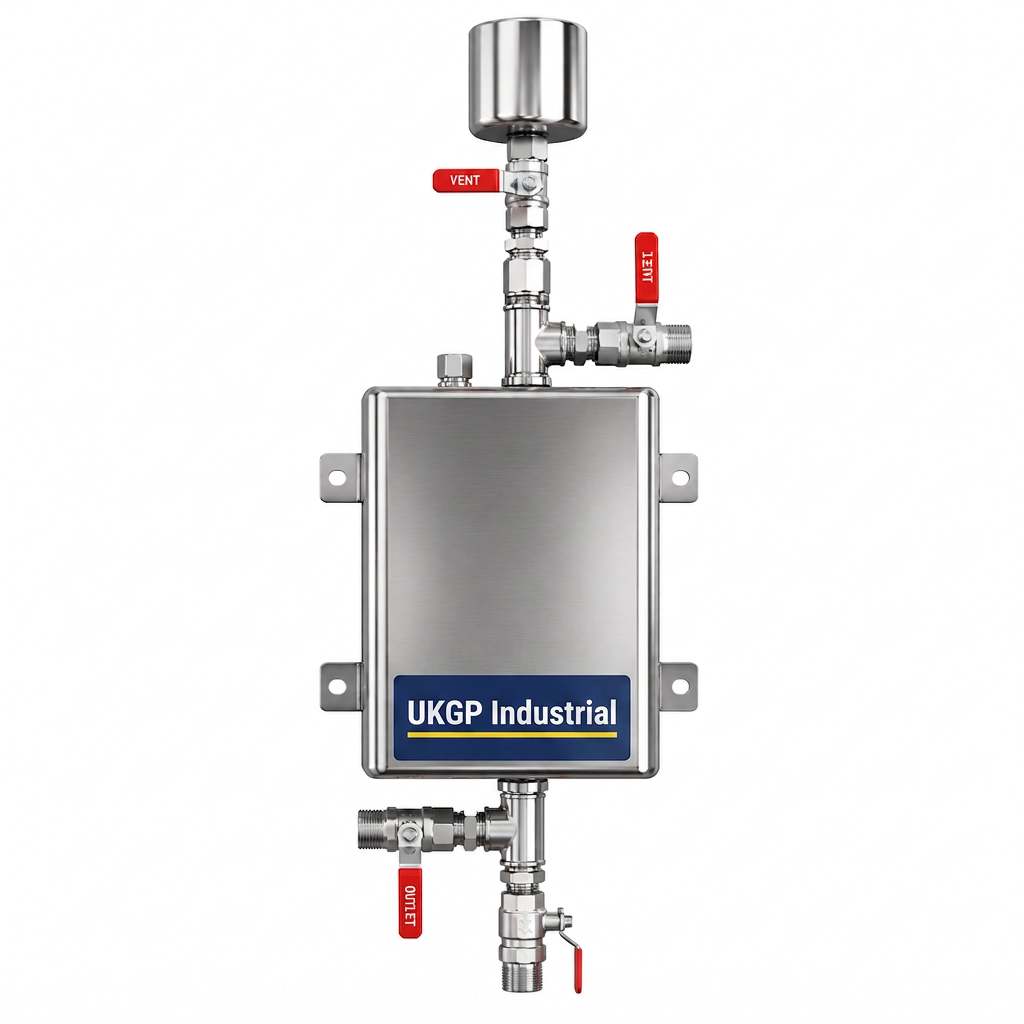
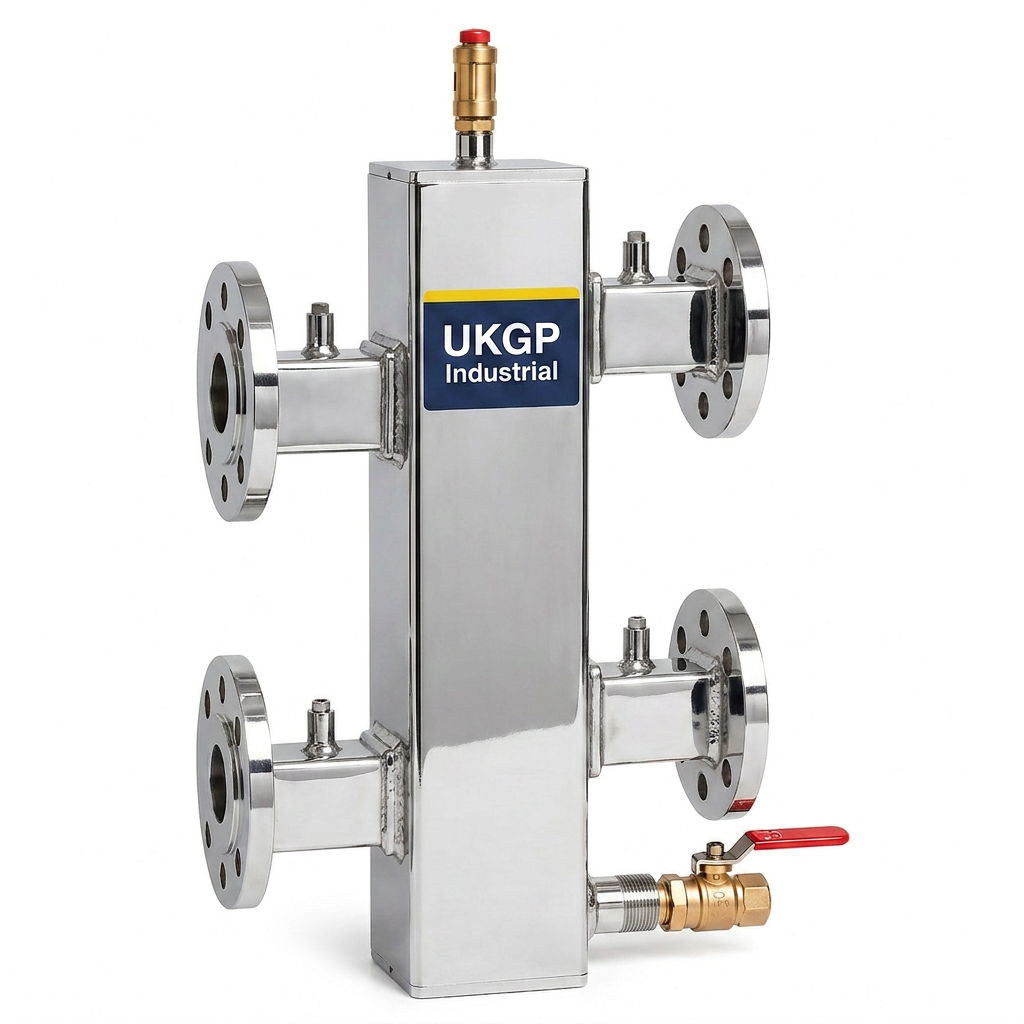
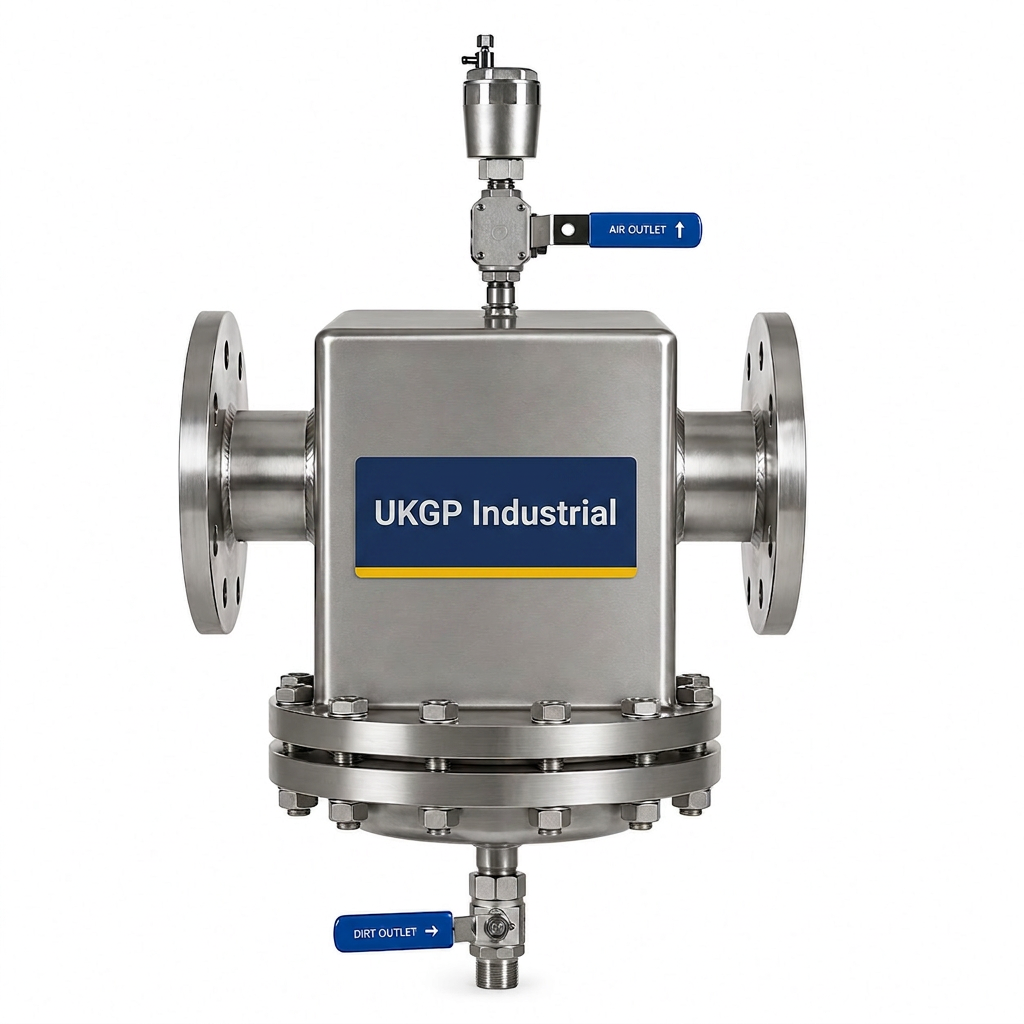
Data centre cooling systems frequently operate with high flow rates and varying thermal loads. Entrained air enters these systems during initial filling, maintenance interventions, or via permeation through non-metallic components. Once present, air can exist as free bubbles, microbubbles, or in a dissolved state. Combined separators utilise the principles of velocity reduction and coalescence; by slowing the fluid velocity within a larger internal vessel, microbubbles are encouraged to rise and be expelled through an automatic air vent (AAV).
Simultaneously, the reduction in velocity allows suspended solids—primarily magnetite and pipe scale—to settle into the lower collection chamber. For data centre applications, where uptime is measured in 'nines', the ability to remove these contaminants without interrupting flow is a critical advantage over traditional Y-strainers, which suffer from increasing pressure drops as they clog.
- Prevention of microbubble-induced cavitation in high-head circulation pumps.
- Mitigation of oxygen-driven corrosion in steel pipework and terminal units.
- Maintenance of design heat transfer coefficients (U-values) in CRAC unit coils.
- Reduction in commissioning time by accelerating the initial degassing phase.
Compliance with BSRIA BG29/21 and BG50/2021
BSRIA BG29/21 'Pre-commissioning Cleaning of Pipework Systems' provides the definitive framework for modern building services. It emphasises that the removal of suspended solids is essential not just during the flush-out phase, but throughout the system's operational life. A high-efficiency separator allows the contractor to demonstrate compliance by maintaining low turbidity levels and preventing the accumulation of 'dead-leg' sludge that can harbour microbial growth.
Furthermore, BG50/2021 'Water Treatment for Closed Heating and Cooling Systems' highlights the synergy between mechanical separation and chemical dosing. While chemical inhibitors prevent corrosion, they cannot remove the physical products of previous corrosion or installation debris. Integrating a robust separator into the plant room ensures that the hydronic fluid remains clear, protecting the sensitive control valves and heat exchangers common in modern Tier III and Tier IV data centres.
Technical Specification and Sizing Criteria
Correct sizing is the most frequent point of failure in plant room design. Selecting a separator based solely on the pipe diameter often leads to suboptimal performance. If the unit is oversized, the fluid velocity may be too low to effectively move microbubbles toward the coalescence media. If undersized, the excessive velocity prevents the 'quiet zone' required for dirt particles to drop out of suspension, and the resulting pressure drop across the unit increases parasitic pumping power consumption.
UKGP Industrial separators are engineered to maintain a low pressure drop (typically <5kPa at design flow) while achieving high separation efficiency. For data centre cooling towers or CHW loops, engineers should specify units with stainless steel internal coalescing elements. Unlike plastic internal components found in some light-commercial units, stainless steel resists the long-term effects of chemical additives and provides more surface area for bubble attachment.
- Flow Rate (m³/h): Units must be sized based on actual flow, not line size.
- Maximum Operating Pressure (bar): High-rise or large-scale facilities may require 10 bar or 16 bar rated vessels.
- Connection Type: PN16 flanged connections are standard for industrial plant rooms.
- Accessibility: Sufficient clearance is required for flushing the sludge valve and servicing the AAV.
The Role of Magnetite Capture
In chilled water systems using carbon steel pipework, magnetite (Fe3O4) is a persistent issue. These fine, black, magnetic particles are often smaller than the mesh size of standard strainers. Combined air and dirt separators utilised in data centres should ideally incorporate a magnetic insert or external magnetic sleeve. This high-intensity magnetic field traps sub-micron particles that would otherwise remain in suspension, causing erosion in high-velocity areas and fouling in CRAC unit heat exchangers.
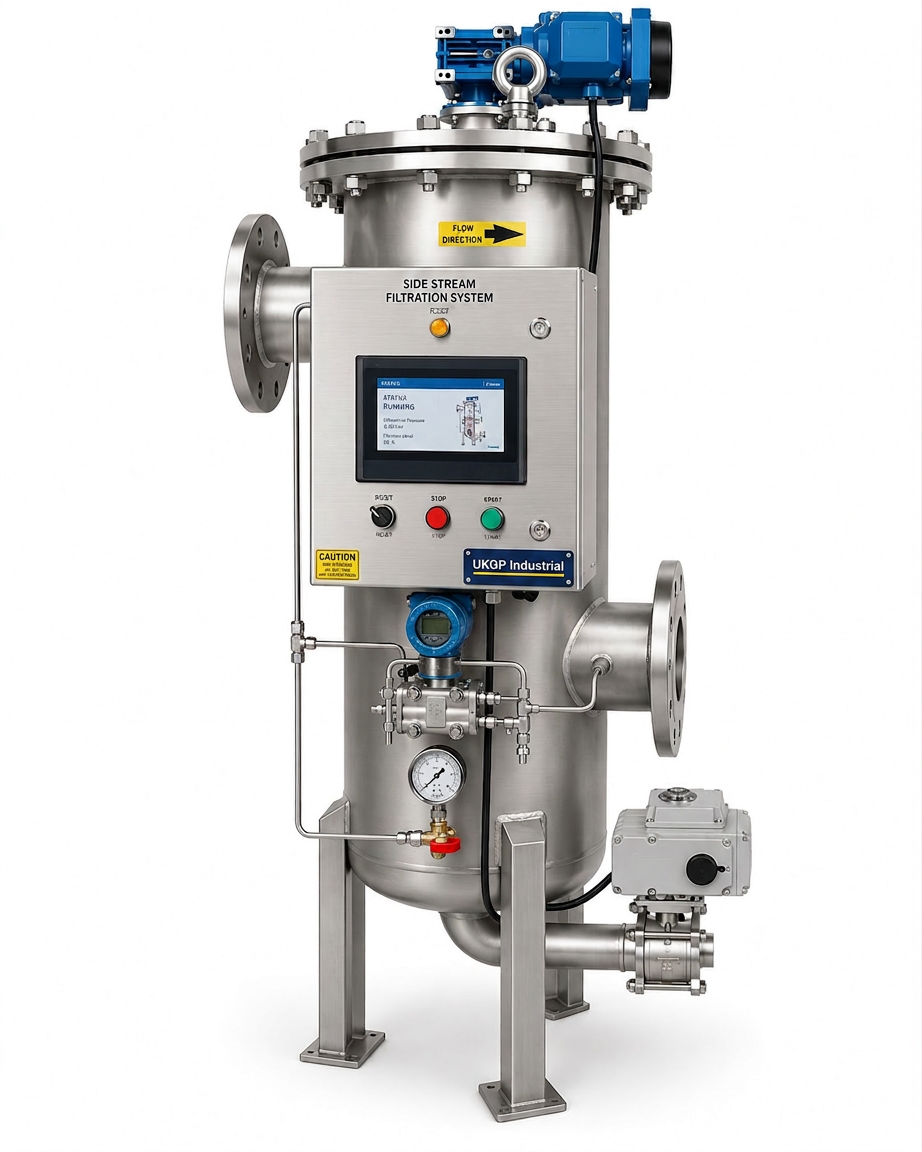
While the primary separator handles the bulk of circulating debris, mission-critical sites often supplement this with side-stream filtration. This dual-approach ensures that even during periods of low flow or thermal bypass, the water quality is continuously polished. By combining a main-stream separator with a side-stream unit, facilities managers can significantly extend the intervals between plate heat exchanger strip-downs and prevent the premature failure of mechanical seals in pumps.
Installation Best Practices for Critical Cooling
Placement of the separator is non-negotiable for performance. For deaeration, the unit should be installed at the point of lowest gas solubility—this is the point in the system where temperature is highest and pressure is lowest. In an LTHW system, this is usually the flow pipework immediately after the boiler. In a CHW system, it is typically the return pipework before the chiller, although flow-side installation is common to protect the circulation pumps from microbubbles.
Periodic maintenance is simplified by the inclusion of a full-bore blow-down valve at the base of the separator. In data centre environments, where ‘hot work’ and system drainage are strictly controlled, the ability to purge collected sludge without shutting down the loop is essential. Engineers should ensure that the discharge from the blow-down valve is routed via a tundish to a suitable drain, allowing for visual inspection of the water quality during the purging process.
Frequently asked questions
Where is the optimum installation point for a combined separator in a CHW circuit?
- They should be installed on the flow pipework after the chiller or heat source (highest temperature) but before the circulation pumps, where pressure is lowest and gas solubility is reduced.
How does fluid temperature affect deaeration efficiency in data centres?
- Microbubbles are easier to release at higher temperatures. In chilled water systems, the lower fluid temperature makes air extraction more challenging, necessitating high-efficiency deaeration media within the separator.
Can an air and dirt separator replace a side-stream filter?
- While separators remove circulating debris, side-stream filtration is often required for fine particulate removal (down to 5 microns) and to meet the stringent water quality mandates of BSRIA BG29/21.
What is the typical pressure drop across a UKGP Industrial separator?
- Pressure drop varies by flow rate but typically ranges between 1kPa and 5kPa for a correctly sized unit at nominal velocity (1.0 - 1.5 m/s). Oversizing can reduce separation efficiency by lowering internal turbulence.
Are separators required on every branch or just the main header?
- It is common practice to install them on the main header; however, for critical resilience (N+1), they may be installed on individual chiller/CRAC branches depending on the specific hydraulic design and maintenance requirements.