The Impact of Contamination on Thermal Efficiency
The thermal performance of a Low Temperature Hot Water (LTHW) or Chilled Water (CHW) system is predicated on the ability of the fluid to transfer energy across heat exchanger surfaces. When air is entrained in the system—whether as free air or microbubbles—it acts as a thermal insulator. Microbubbles have a tendency to adhere to the hottest surfaces, such as boiler heat exchangers, significantly reducing the heat transfer coefficient. This forces the primary heat source to work harder and run longer to achieve the required secondary temperatures.
Similarly, the accumulation of dirt and sludge, primarily magnetite, creates a fouling layer on terminal units, radiators, and radiant panels. According to BSRIA BG50, even a millimetre of scale or magnetite buildup can reduce heat transfer efficiency by up to 10%. By utilising a combined air and dirt separator, engineers can eliminate these barriers to heat transfer, ensuring the system operates as close to its theoretical design efficiency as possible.
- Microbubble formation at high-temperature interfaces.
- Suspended magnetite (black oxide) from internal corrosion.
- Bacterial growth in low-temperature CHW circuits.
- System debris remaining from initial installation.
Hydraulic Resistance and Pumping Power
Pumping energy accounts for a substantial portion of a building's electrical load. In a fouled system, the accumulation of debris in control valves and narrow-bore heat exchangers increases the overall system resistance (head). To maintain designed flow rates (m³/h), variable speed pumps must operate at higher RPMs, consuming more energy in accordance with pump laws, where power is proportional to the cube of the speed.
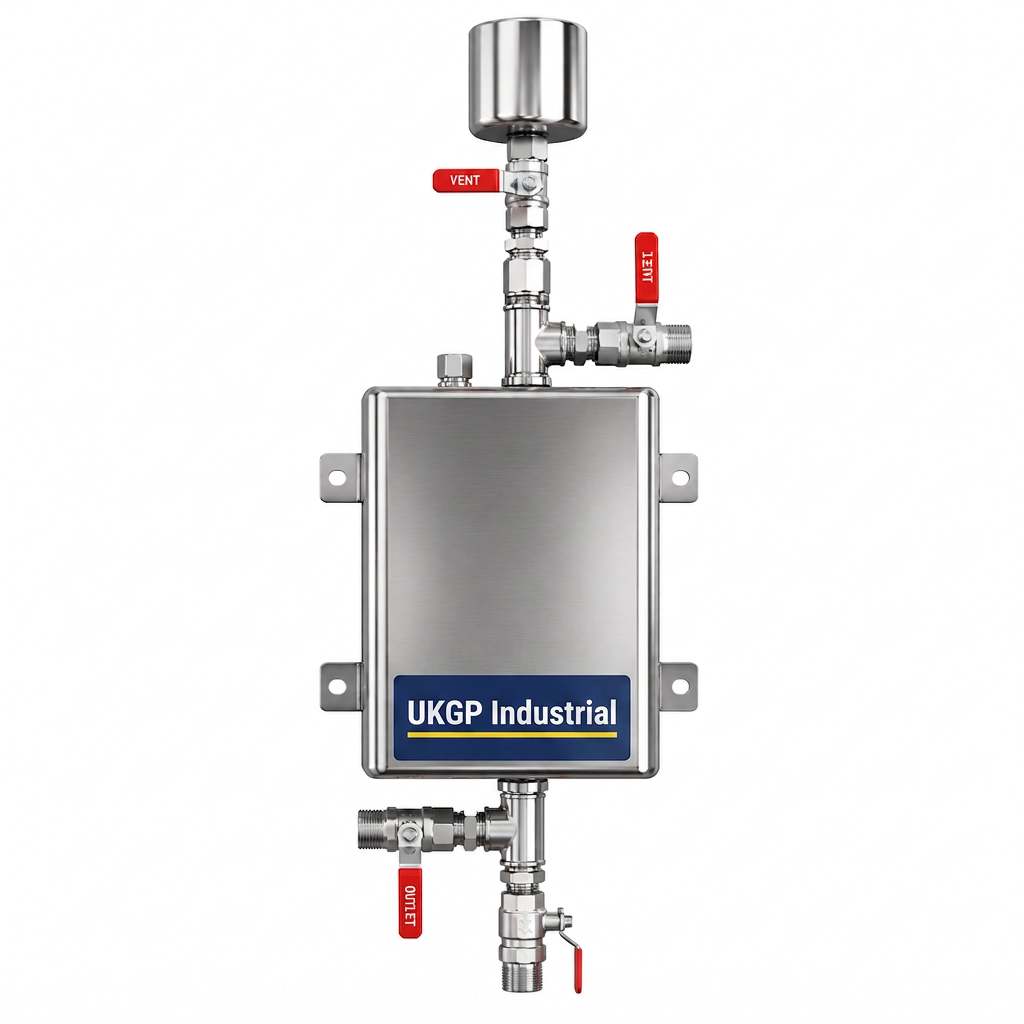
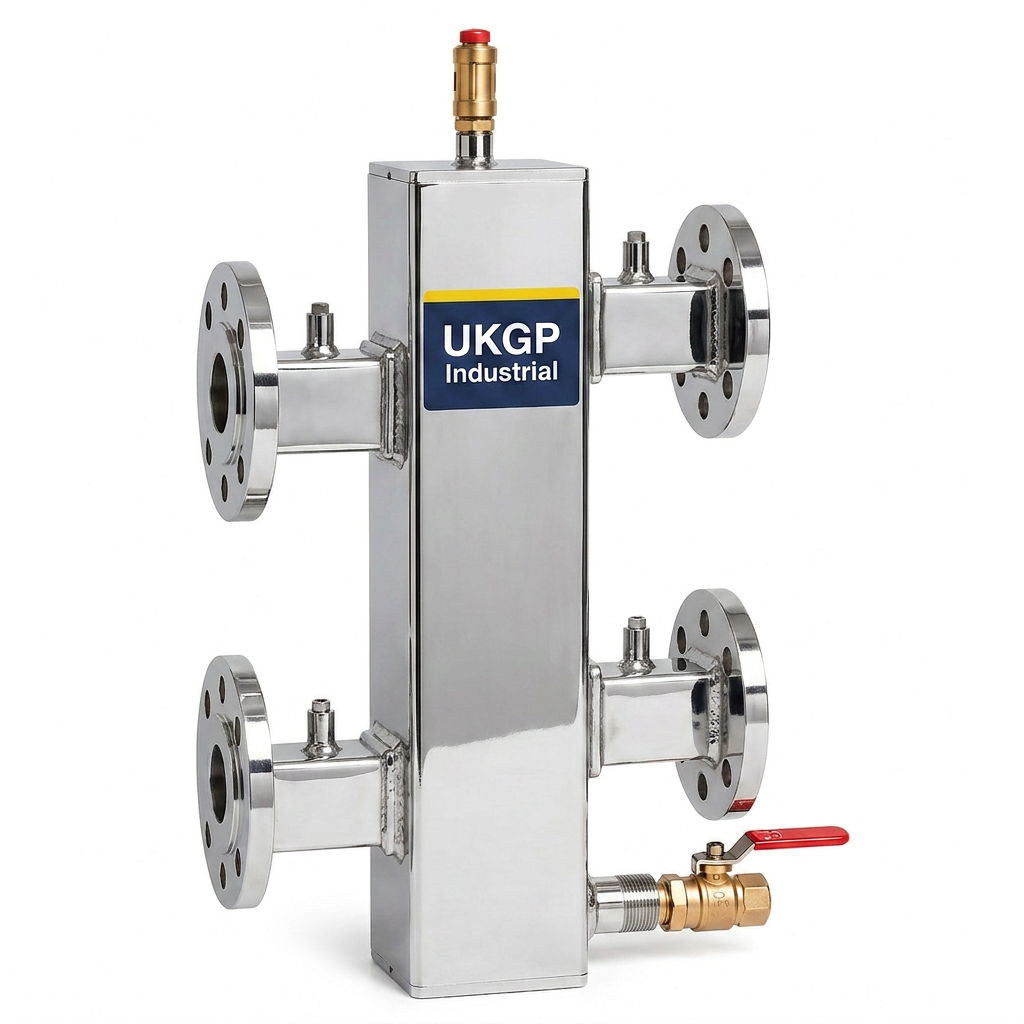
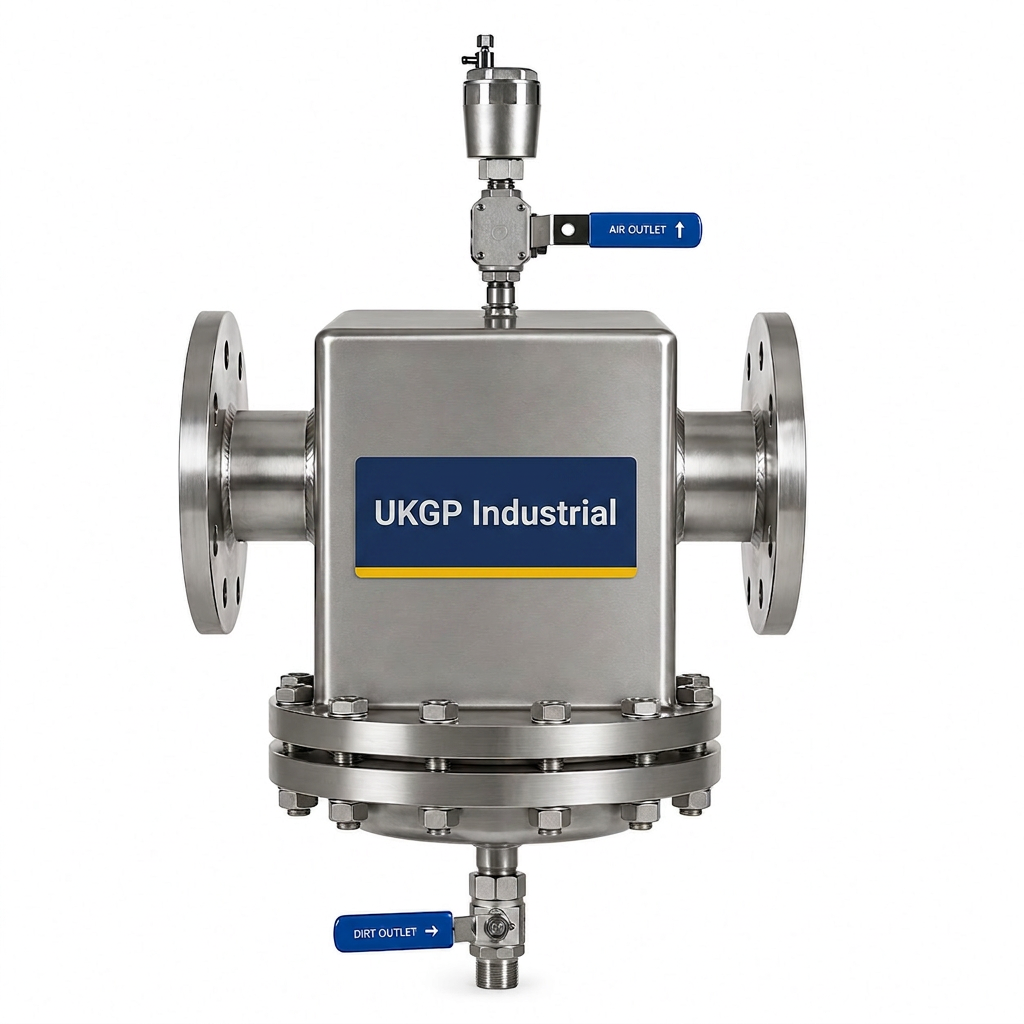
Integrated air and dirt separators, such as those provided by UKGP Industrial, utilize a low-velocity 'quiet zone' to allow particles to settle and air to rise without significantly increasing the pressure drop across the unit. Unlike traditional Y-strainers, which see a rise in differential pressure as they become blocked, a high-quality separator maintains a constant, low-pressure drop throughout its service life. This allows for more precise hydraulic balancing and prevents 'pump hunting,' further reducing electrical consumption.
Magnetite Management and Component Longevity
Magnetite is the most common byproduct of corrosion in closed-loop systems. These fine, black iron-oxide particles are frequently sub-micron in size, meaning they pass through standard strainers. In modern systems, the presence of high-efficiency, permanent magnet circulators makes this a critical issue; the magnetic rotors attract magnetite, leading to premature pump failure and increased frictional resistance.
By employing a separator with an internal magnetic element, these particles are stripped from the flow. This protection extends beyond the pumps to the Plate Heat Exchangers (PHEs), where narrow channels are particularly susceptible to clogging. Maintaining clean water not only saves energy through better heat exchange but also reduces the 'hidden' energy cost of manufacturing and installing replacement components due to premature wear.
Compliance with BSRIA BG29/21 and BG50
UK building services engineers must adhere to the guidance set out in BSRIA BG29/21 (Pre-commission cleaning of pipework systems) and BG50 (Water treatment for closed heating and cooling systems). These standards emphasise that water quality must be managed from the moment of first fill and throughout the life of the building. A combined air and dirt separator is often the primary line of defence in a comprehensive water quality strategy.
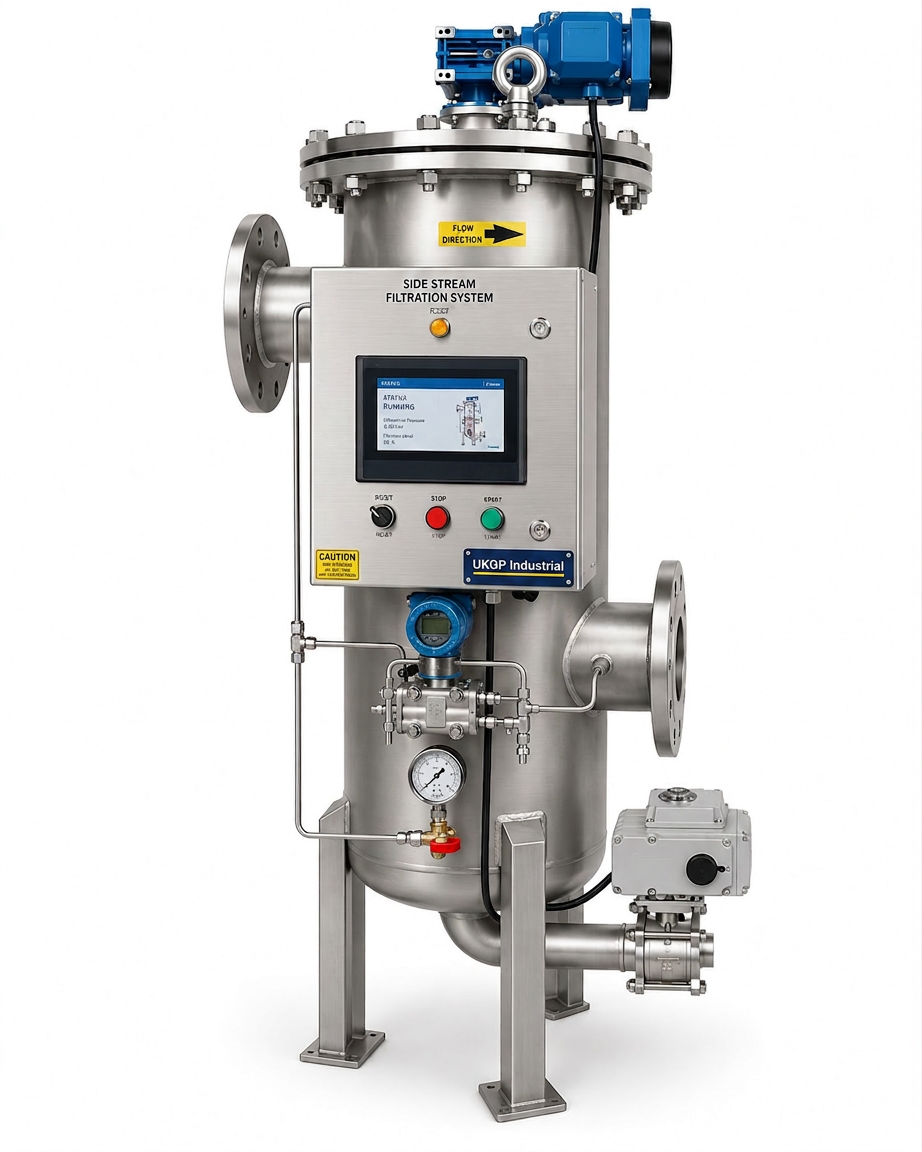
While the separator handles the bulk of the debris and deaeration, it is often used in conjunction with side-stream filtration for larger commercial systems. Side-stream units provide the finer filtration required to meet the stringent water clarity targets specified for sensitive modern plant. Integrating these technologies ensures that the chemical inhibitors used in the system can work effectively, as they are not 'spent' reacting with high volumes of mobile sludge or dissolved oxygen.
Deaeration and the Prevention of Oxygen-Linked Corrosion
Oxygen is a primary driver of corrosion in closed loops. While initial fill water contains dissolved oxygen, the most damaging ingress occurs through micro-leaks, permeable membranes, and during top-ups with fresh water. Deaerators within combined units work on the principle of Henry’s Law: by creating a low-velocity zone where pressure is reduced or temperature is increased, the solubility of gases decreases, allowing them to be released through an automatic air vent.
Constant deaeration prevents 'cold spots' in radiators and ensures air-free flow through terminal units. From an energy perspective, this eliminates the need for manual venting—a maintenance-heavy task—and prevents the erratic thermostat readings and poor temperature control that lead to overheating or overcooling. A stable, air-free system is inherently easier to control through a Building Management System (BMS), leading to tighter deadbands and lower energy waste.
Practical Installation for Maximum Return on Investment
The placement of the air and dirt separator is critical to its efficiency. For LTHW systems, the unit should be installed on the flow pipe, where temperatures are highest and gas solubility is lowest. For CHW systems, the return pipe is the optimal location before the fluid enters the chiller, as this is the warmest point of the circuit. Selecting the correct size—typically based on flow rate rather than pipe size—ensures that the internal velocity remains within the manufacturer's specified limits for effective separation.
Investing in a high-quality UKGP Industrial air and dirt separator offers a rapid ROI. The combination of reduced fuel consumption (via improved heat transfer), lower electrical demand (via reduced pumping head), and significantly reduced maintenance and downtime makes these units an essential specification for any modern commercial plant room. In the context of ESOS (Energy Savings Opportunity Scheme) and broader Net Zero targets, ensuring system cleanliness is one of the most cost-effective interventions available to FM teams.
Frequently asked questions
How do air and dirt separators contribute to energy savings?
- According to BSRIA BG29/21 and BG50, excessive air and dirt lead to increased corrosion rates and reduced flow. Removing these ensures the system operates at its design heat transfer coefficient (U-value), preventing the 10-15% efficiency drop often seen in fouled systems.
Why should I use a dirt separator instead of a standard Y-strainer?
- While a standard strainer captures large particles, a dirt separator uses a quiet zone and often magnetic filtration to capture sub-micron particles and magnetite without increasing pressure drop as it fills. This maintains higher pump efficiency.
Where is the optimum location for an air and dirt separator?
- The separator should be installed at the point of lowest solubility for gases. In LTHW systems, this is on the flow pipe after the boiler (hottest point). In chilled water systems, it is on the return pipe before the chiller (warmest point).
Does air removal really impact heat transfer?
- Microbubbles act as an'insulator' when they attach to heat exchanger surfaces. By removing these, the contact between the water and the metal surface is maximised, ensuring the boiler or chiller can modulate down rather than running longer to meet the setpoint.